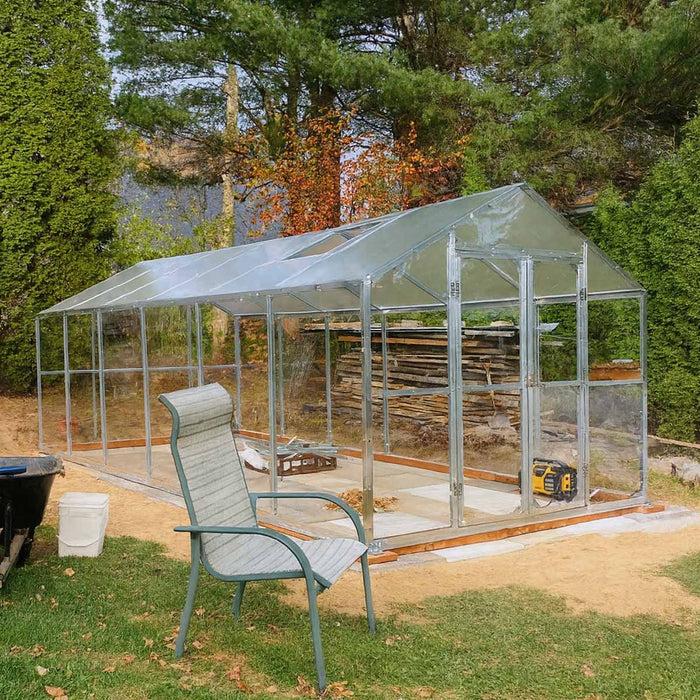
As the growing season gets under way across Australia, home gardeners start thousands of vegetable, herb, and flower seedlings in trays, pots, and punnets. Those seedlings need steady warmth and bright light during their first weeks, and a small structure built around that need can make a real difference. A TMG Heavy Series greenhouse kit with a polycarbonate roof and clear walls is one of the simplest ways to give them that, provided the gardener understands how the structure manages heat and air.
The useful questions for any seedling greenhouse are about temperature swings, light quality, and ventilation, not about how large the structure looks. Each of those depends on a small number of design choices, and they are easier to judge once the physics behind them is clear.
How a Greenhouse Holds Warmth
Sunlight passes easily through clear panels and warms the soil, trays, and benches inside. Those surfaces then give the heat back as longer-wavelength radiation, which the panels block far more effectively. The heat is trapped, and the air inside climbs above the outside temperature.
Think of a blanket on a cold night. The blanket does not make heat, it slows the loss of the heat the body already produces. A greenhouse works the same way, slowing the escape of warmth that sunlight put in, and that slowing is what extends the season for seedlings.
Twin-Wall Panels Add an Insulating Layer
The roof on the TMG-GH811 uses twin-wall polycarbonate panels 4 millimetres thick. Each panel has two skins separated by a layer of air in small channels, and trapped air conducts heat poorly, so the panel slows heat loss in the same way that double glazing slows it in a window.
The panels also scatter incoming light rather than passing it straight through. Diffused light reaches the lower leaves and spreads evenly across a tray, which reduces harsh shadows and hot spots, and that suits young seedlings better than a single patch of strong direct sun.
Temperature Swings Are the Real Risk
Seedlings do not mind warmth as much as they mind sudden change. On a clear spring day a small greenhouse can heat quickly, and at night it cools almost as fast. A large swing between day and night stresses young plants and slows growth, while a steady range keeps them growing evenly.
A greenhouse that gets too hot can also cook seedlings in a single afternoon, especially when the vent is closed and the sun is high. This is the main reason ventilation matters as much as insulation, so the structure needs managing through the day.
One Roof Vent Does Less Than You Might Expect
The greenhouse has a single manual roof vent. Warm air rises, so a vent at the top lets hot air escape, and cooler air is drawn in from lower openings to replace it. That movement is the same one that works in a chimney, and it cools the space without any power.
A single vent has limits. It moves a modest volume of air, so on hot days it needs help from the door, which should be opened partly or fully to give the incoming air somewhere to enter. Shade cloth over the roof is another common step, because it cuts the heat that has to be removed in the first place.
Door, Layout, and Working Space
The bi-parting door is 1.12 metres wide and 1.98 metres high, which is wide enough for a gardener carrying trays or pushing a small trolley. It also gives access to the full length of the floor, and the structure's sidewall height of 1.75 metres leaves room to stand and work at a bench.
Inside, about 7.4 square metres of floor can be arranged in several ways, and the arrangement shapes how well seedlings grow, how easily they are watered, and how quickly the gardener can move trays outside for hardening off:
- Benches: raise trays off cold ground and improve airflow
- Shelves: use the height of the walls for extra trays
- Path: keep a clear walkway wide enough for a trolley
- Water: place taps or watering cans near the door
Keep trays where the light is most even, which is usually near the centre of the structure, and place heat-loving plants away from the door where cold air enters on cool mornings, since the first few metres inside the doorway are always the coldest part of the floor.
Water, Humidity, and Disease
Humid air and damp soil suit seedlings, but they also suit fungal disease. Young plants are prone to damping off, a condition in which seedlings rot at the base and collapse. It is encouraged by wet soil, stagnant air, and poor hygiene, which means clean trays and good ventilation help as much as careful watering.
Water in the morning so leaves dry before evening, and avoid leaving trays standing in water. In a small greenhouse the air changes slowly, so a damp morning is a good reason to open the door and vent even when the day is cool.
Hardening Off Before Planting Out
Seedlings raised under cover are soft, and they need gradual exposure to wind, sun, and cooler nights before going in the ground. This process, called hardening off, takes about a week or two. The greenhouse makes it easy, because the door and vent can be opened a little more each day.
Skipping the step leads to scorched leaves and setbacks, even when the plants looked healthy inside. A seedling greenhouse is best treated as a stage in a process that ends in the garden bed, and the gardener's routine of opening and closing is part of that process.
Frame, Footing, and Wind
The galvanised steel frame uses ground base bars for stability, and trusses spaced 1 metre apart carry the roof. Galvanising resists rust, which matters in a humid structure, and the frame should be placed on level ground and anchored to suit the site, because a light structure with large panels catches wind.
Choose a spot that gets morning sun and some shelter from the strongest winds, and keep it clear of overhanging trees, because falling branches and dripping sap are both hard on polycarbonate panels. Easy access to water and a nearby path also save effort.
Choosing a Structure for Seedlings
A backyard greenhouse is judged less by its size than by how it handles heat, light, and air, so look at the roof panels, the venting, the door, and the footing before anything else. As more households grow part of their own food, compact structures of this kind are likely to become more common, and a polycarbonate greenhouse that balances warmth with airflow suits that trend well. TMG Industrial supplies this kit for gardeners who want a practical, clear-walled place to raise seedlings.