Why Tiny Habits Beat Big Overhauls
Sustainability often gets presented like a full-home renovation: tear everything out, start from scratch, and somehow finish it all in one montage with upbeat music.
Real life is not a renovation montage.
Most of us have jobs, families, laundry piles, and a brain that occasionally forgets why it walked into the kitchen. Trying to “do” sustainability as one huge project is a fast track to burnout.
A more realistic approach is to think in terms of tiny, rooted habits – especially ones that connect you to nature. Things like watering herbs on the windowsill, composting kitchen scraps, or checking your garden for five quiet minutes can do more than just help the planet. They can actually calm your nervous system, too.
Let’s look at how that works.
Why Sustainability Feels So Overwhelming (And Why That’s Normal)
The “Do Everything, All at Once” Problem
If you’ve ever decided, “Okay, I’m going to live more sustainably,” and then immediately felt tired… you’re not alone.
Modern eco-advice often sounds like:
-
Go zero waste
-
Grow all your own food
-
Never fly again
-
Ditch your car
-
Switch banks and energy providers
-
Learn an entire new set of recycling rules
By Friday.
On top of that, social media shows us polished versions of “green living”: curated pantries full of matching jars, perfectly mulched raised beds, and homes that look like they’ve been styled for a magazine shoot.
Meanwhile, your reality might look more like:
-
Two slightly droopy houseplants
-
A compost attempt that smells suspicious
-
A stack of reusable bags that never quite make it back to the car
Your brain compares the two and decides: “I’m failing.” Cue guilt, stress, and the urge to give up completely.
The problem isn’t that you don’t care. It’s that the bar has been set at “eco superhero,” instead of “human doing their best.”
In truth, sustainable living has more in common with learning a language than cramming for an exam. You don’t become fluent by studying once for 10 hours. You get there by showing up for 10 minutes a day, over and over.
Progress at a Human Pace: A Kinder Approach to Sustainability
Slow, Steady, and Actually Doable
Imagine learning guitar.
If you tried to learn all the chords in one brutal afternoon, your fingers would hate you and you’d probably quit. But if you practice a few chords most days, you slowly get better. You don’t see progress every minute, but over a few months, things that once felt impossible start to feel easy.
Sustainable living works the same way.
“Progress at a human pace” means:
-
Choosing a few small, realistic actions
-
Repeating them until they become normal
-
Letting go of perfection and all-or-nothing thinking
You might:
-
Swap one product at a time for a more eco-friendly version
-
Focus on reducing food waste instead of overhauling everything you buy
-
Grow just a little bit of your own food instead of trying to become a full-on homesteader in one season
None of these are dramatic. They’re more like tiny stitches in a quilt. One stitch on its own doesn’t look like much. But keep going and you end up with something warm and useful.
Human-paced sustainability is about:
-
Less guilt, more curiosity
-
Less “I should do everything,” more “What’s one thing I can do today?”
-
Less burnout, more consistency
And one of the loveliest ways to practice it is through simple, nature-based routines.
How Gardening Turns Sustainability Into a Daily Ritual
The Magic of a 5-Minute Garden Check-In
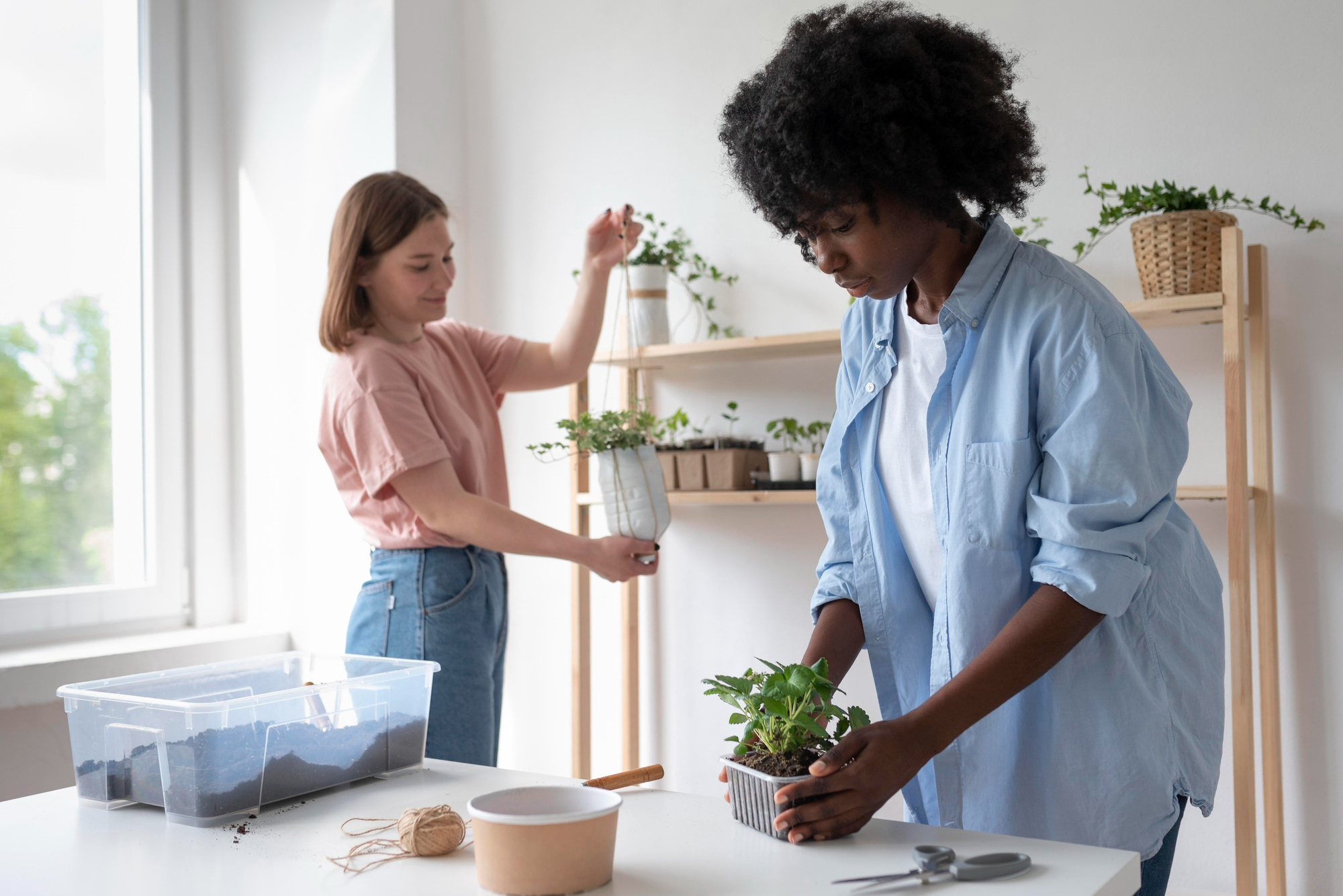
Gardening doesn’t have to mean growing all your own food or turning your yard into a show garden (although if you want it to mean that, a good landscape design professional can help get you there). It can be as modest as a few pots and a daily wander.
Those tiny routines might look like:
-
Watering a pot of basil each morning
-
Turning coffee grounds and veggie scraps into compost
-
Planting one new thing each season: a tomato, a handful of radish seeds, a tray of lettuce
You’re not just “maintaining plants.” You’re creating a relationship with a piece of earth, however small.
Gardening gently brings sustainability down to earth:
-
“Food miles” feel different when you snip herbs from your own pot
-
Water stops being abstract when you see how your plants react to too little or too much
-
Seasons become something you feel in your body, not just see on a calendar
And it’s accessible almost anywhere:
-
With a yard
-
Start with one bed or a couple of raised planters. You don’t have to landscape the whole thing at once.
-
-
With a balcony or patio
-
A few containers with herbs, salad greens, and maybe a dwarf tomato can be surprisingly productive.
-
-
With just a windowsill
-
Green onions in a jar, a pot of mint, or a small tray of microgreens still count.
-
The goal isn’t to impress anyone. It’s to have a small, living reason to step away from the noise and into the present.
Tending Your Plants, Tending Your Nervous System
Dirt, Breath, and a Quieter Brain
There’s another layer to this: what gardening does for your nervous system.
When you step outside (or over to your window) and really notice your plants, something shifts. Your attention narrows to:
-
How the light hits the leaves
-
Whether the soil looks dry
-
Which flowers have opened today
For a few minutes, you’re not scrolling, doom-thinking, or juggling six mental tabs. You’re just here.
Some simple grounding ideas:
-
Do a “garden lap”
-
Take a slow lap around your yard, balcony, or indoor plants. Touch a leaf, pinch some herbs, notice what’s changed since yesterday.
-
-
Go barefoot if you can
-
Stand on grass or soil for a minute. Feel the ground supporting your weight.
-
-
Take three breaths before you water
-
Inhale slowly, exhale slowly, then water. You’re giving the plants what they need and offering yourself a mini reset at the same time.
-
Your plants are quiet teachers of pace. They grow steadily, not urgently. They don’t care how full your inbox is. They respond to care and conditions, not panic.
When you learn to tend them with patience, you’re also practicing how to tend yourself with a little more kindness.
Making Sustainability Feel Gentle, Not Guilt-Driven
From “I Should Do More” to “I Did One Good Thing Today”
Guilt might push you to make one big change, but it doesn’t usually support years of small ones.
A gentler mindset is:
“What’s one small, good thing I can do today?”
That one thing could be:
-
Using up leftovers instead of letting them quietly expire in the fridge
-
Choosing the loose produce instead of the bagged version
-
Planting one herb you’ll actually use in your cooking
Over time, these tiny choices add up. They also rewrite your self-story from:
-
“I’m bad at this sustainability thing”
to:
-
“I’m someone who pays attention to waste.”
-
“I’m someone who grows a bit of my own food.”
-
“I’m someone who chooses better options when I reasonably can.”
Some gentle, low-pressure experiments to try:
-
Swap one household product at a time
-
When something runs out, choose a slightly more eco-friendly replacement. No need to throw anything away just to “start fresh.”
-
-
Choose one “low-waste experiment” per month
-
Maybe cloth napkins, maybe a compost bin, maybe a weekly trip to a local farm stand.
-
-
Grow something edible, no matter how small
-
Even a pot of parsley can become a tiny symbol of “I’m doing a thing that helps.”
-
The aim isn’t perfection. It’s a life where “more sustainable” and “more humane” gradually become the same direction.
Tiny Nature Routines You Can Start This Week
Ideas for Different Spaces and Energy Levels
You don’t need a huge time block or perfect motivation. Pick one or two of these and see what sticks.
If you have a yard:
-
Create a “test patch”
-
One small bed where you experiment without pressure. Try herbs, lettuce, or pollinator flowers.
-
-
Start an easy compost area
-
Toss in veggie scraps, coffee grounds, and yard trimmings. Let it be imperfect; compost is forgiving.
-
-
Schedule a weekly 10-minute tidy
-
Pull visible weeds, deadhead flowers, water the thirstiest plants.
-
If you have a balcony or patio:
-
Build a mini herb corner
-
Basil, mint, chives, and thyme are good starters.
-
-
Choose one “hero plant”
-
A tomato, pepper, or dwarf fruit tree that you check on most days.
-
-
Create a 5-minute sunset ritual
-
Step out, water your pots, and look at the sky. Phone stays inside.
-
If you only have a windowsill:
-
Regrow kitchen scraps
-
Green onions, lettuce stumps, and celery bases are fun experiments.
-
-
Keep one plant just for sensory joy
-
Something you love to touch or smell.
-
-
Make a “tea moment”
-
Brew a simple herbal tea using fresh leaves from your windowsill when you can.
-
If your energy is low:
-
Choose sit-down tasks
-
Seed-starting, repotting, or trimming herbs at a table or countertop.
-
-
Use short timers
-
Two or three minutes of plant care still counts.
-
-
Let some areas be wild on purpose
-
A slightly messy corner can be habitat, not failure.
-
The point is not to become “the perfect gardener.” It’s to weave small nature moments into the day so sustainability and self-care start to feel like the same thing.
Calm, Sustainable Living Beyond the Garden
Bringing Garden Logic Into Everyday Life
The pace that works in the garden can also work in the rest of your life.
Just like plants can’t be rushed, your nervous system doesn’t love being pushed to the limit all the time. You can:
-
Break your to-do list into smaller, realistic chunks
-
Use nature moments as breaks between tasks
-
Think in seasons and cycles instead of constant urgency
Plenty of people and projects are exploring this overlap between eco-friendly living and nervous-system-friendly routines. For example, some slow-living and sustainability spaces – like the project Calm Progress at calm-progress.com – look at how small, nature-based habits and calmer productivity can reinforce each other instead of competing for your energy.
It’s not about “hacking your life.” It’s about noticing what actually makes your days feel more livable and your choices more aligned with what you care about.
Finding Inspiration Without the Guilt
Choosing Voices That Feel Supportive
There’s no shortage of content about sustainability. The trick is to choose voices that make you feel supported, not scolded.
You might find ideas through:
-
Local gardening groups or community gardens
-
Neighbors who grow food or keep pollinator-friendly yards
-
Blogs and sites that blend gardening with simple living
-
Slow-living and eco-minded creators, including those that talk about nervous-system health alongside greener habits
Some people enjoy following projects where the visuals and reminders lean toward “small, gentle shifts” rather than “do everything right now.” The exact mix that inspires you will be personal. The important thing is that it helps you move forward at a pace you can sustain.
Conclusion: Small Roots, Big Change
Start Where You Are, With What You Have
You don’t need an off-grid cabin, a huge budget, or endless free time to live more sustainably.
You can:
-
Grow a pot of herbs
-
Compost a bit of your food waste
-
Take a daily lap around your yard or block and notice what’s blooming
-
Swap one product, one habit, or one routine at a time
These small, rooted habits have a quiet power. They anchor your day. They slowly reduce your impact. They help your mind switch from “constant hustle” to “present, breathing human who’s part of a living world.”
You don’t have to sprint your way to sustainability.
You can walk there – maybe barefoot on the grass, mug of tea in hand – one tiny, human-paced step at a time.