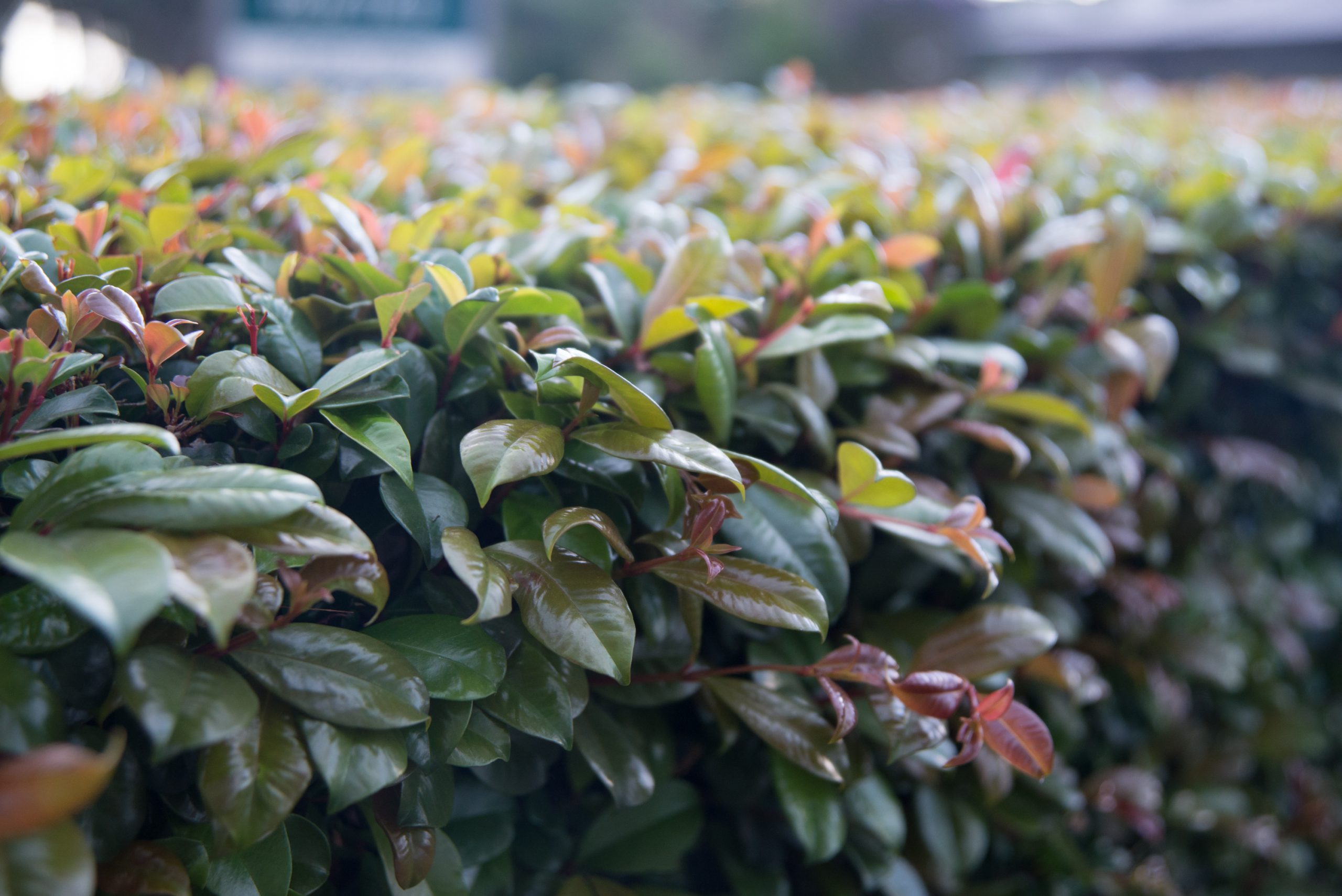
Someone plants five lilly pillies along a fence line in spring. Little 30cm tubestock, glossy and harmless, with a sweet promise on the label: "neat 2-metre screen." They water them in, stand back, and decide the job is done.
Two summers later, there's a four-metre wall bulging over the neighbour's side, branches pushing through the Colorbond, and a quote from a tree crew to deal with it.
Nothing went wrong with the plant. The plant did exactly what plants do. What went wrong was a belief most people hold without noticing: that the size of a lilly pilly is decided by the plant. It isn't. It's decided by you, on a schedule, with a pair of secateurs. The label height is a ceiling, not a destiny.
So let's answer the three questions everyone actually types into a search bar. How big does it get? How long does it live? When do you prune it? And let's answer them in the order that saves you money, not the order that sounds tidy.
"How big" is a range, and you choose where you land
Here is the first thing to unlearn: there is no single answer to how tall a lilly pilly grows, because "lilly pilly" isn't one plant. It's a common name covering dozens of species and hundreds of cultivars across the Syzygium, Acmena and Waterhousea groups.
The spread is genuinely enormous:
|
Type |
Mature height |
Best use |
|
Dwarf cultivars |
1–3 m |
Borders, low hedges, pots |
|
Medium hedging varieties |
3–6 m |
Privacy screens, formal hedges |
|
Large tree species |
10–15 m |
Feature trees, big blocks |
|
Rainforest species (e.g. S. luehmannii) |
up to ~30 m |
Parks, acreage, not your fence line |
The cultivar most people actually want for a hedge is something like Syzygium australe 'Resilience'. Walk into a nursery, and you'll see it sold as a tidy screen. What the label often buries is that growers list its unpruned mature height at roughly 3 to 6 metres, with a natural width of 2 to 3 metres. The reason it works as a "neat 1.8 m hedge" is that it's commonly clipped down to a 1.5 to 4 metre form. Stop clipping, and it doesn't politely hold at hedge height. It heads for its actual ceiling, which is a small tree.
That's the trap in one sentence. The number people remember is the trimmed height, not the real one. Hedge height is a haircut, not a genetic limit.
This is the whole trap in one sentence. People read the height on the label as a prediction. It's a target you have to actively hit.
So the implication for you is blunt: choose the ceiling at the nursery. If you have a 1.8 m fence and want privacy without a maintenance habit, buy a cultivar whose natural mature height sits near where you want it, not a vigorous screening variety you'll be fighting forever. The cheapest pruning is the pruning you designed out before planting.
"How long does it live?" is the wrong question
People ask about lifespan because they're really asking, "Is this a commitment?" And the honest answer is yes, more than you think, but not in the way you fear.
There's no clean published lifespan number for lilly pillies the way there is for, say, a fruit tree's productive years, and I'm not going to invent one. What's true is that these are long-lived woody perennials. A healthy lilly pilly will comfortably outlast your interest in gardening, your renovation plans, and quite possibly your ownership of the house. In practical terms, you're planting something that becomes part of the property's bones.
Which means the lifespan that actually matters isn't the plant's biological clock. It's the hedge's working life: how many years it stays dense, green, and the right shape before it goes leggy, holey, or feral.
And that lifespan is short or long, entirely depending on how you treat it. A well-managed lilly pilly hedge stays a hedge for decades. A neglected one becomes a structural problem in three or four years. Same plant. The variable is you.
Think of it less like buying a pet with a known lifespan and more like adopting a habit. The habit, not the plant, decides how the story ends.
Pruning: timing beats brute force, every time
If you take one thing from this piece, take this. The single highest-leverage thing you do to a lilly pilly is prune it early and lightly, and you do the heavy thinking about when, not how hard.
The rhythm that works:
- Late winter to early spring: the main shaping cut, before the growing season kicks off. This sets your height and line for the year and lets the plant pour its spring energy into recovering where you want it.
- After each growth flush (spring through summer): light tip prunes. Tipping the new growth forces the plant to branch sideways, which is what turns a thin row of sticks into a solid green wall.
- Avoid hard pruning in winter and during heatwaves. Growth has slowed; the plant sulks, recovers poorly, and you've stressed it for nothing.
Here's the mistake I see constantly. People wait. The plants are small and look fine, so they skip the first two summers of tip-pruning entirely. Then the hedge is tall and bare at the base, because nobody forced it to branch low down, and now the owner does one panicked heavy chop in the wrong season and wonders why it looks worse.
A lilly pilly grown for screening wants a light haircut every few months, not an annual hack. Do not wait until it reaches full height to start. By then the architecture is set against you.
The other half of timing: prune on an angle so the top is narrower than the base. If the top is wider, it shades out the bottom, the lower leaves drop, and you get a hedge that's a dense lid on bare legs. Light reaches the bottom only if you let it.
Your cheapest pest control happens at the nursery
Now the bit nobody warns first-time buyers about: psyllids.
The lilly pilly psyllid is a tiny sap-sucker that attacks soft new growth and leaves the foliage looking like bubble wrap, all pimpled bumps and distortion. Here's what actually happens in real gardens. The new flush comes out gorgeous, that coppery red-bronze everyone buys the plant for. Weeks later, it's blistered and ugly. The owner assumes disease, panics, and sprays everything in sight.
The spray is mostly theatre. Two things genuinely move the needle, and both are decisions, not products.
First, variety. Cultivars like 'Resilience' were specifically bred to resist psyllids, which is the entire reason that name exists. Buying a psyllid-resistant variety is the closest thing to free, permanent pest control you'll ever get. You make the choice once, at the counter, and never spray for it again.
Second, don't force soft growth. Over-fertilising pushes out lush, tender foliage that psyllids love. The advice to dump nitrogen on a struggling hedge often backfires by serving up exactly the soft tissue the pest targets. Feed moderately, prune for airflow, and you starve the problem instead of feeding it.
The implication ties the whole piece together: the gardener who picked the right cultivar and prunes on time has essentially no pest routine. The one who grabbed whatever was on the trolley and fed it hard is on a spray schedule forever. Same genus. Different decisions were made months earlier.
When a hedge becomes a removal job
Everything above is preventable maintenance. This section is what happens when prevention didn't happen.
There's a point where a lilly pilly crosses from "manageable with secateurs" to "this needs equipment." A specimen that's been left for years, planted too close to a structure or boundary, with a trunk thickened well beyond what hand tools handle and a canopy lifting into power lines or over a neighbour's roof, isn't a pruning job anymore. Cutting it back hard at that stage often leaves you with an ugly stump that reshoots into a worse problem, or a half-dead plant that never recovers its shape.
That's the territory where you bring in a professional removal and stump-grinding crew like Lakeside Trees and Stumps, because taking out a mature, woody specimen cleanly, and grinding the stump so it doesn't resprout, is genuinely a different job from trimming a hedge. The grinding part matters: Lilly pillies are vigorous, and a stump left in the ground is an invitation to start the whole cycle over.
The reason I'm ending here, on the expensive option, is to make the cheap option vivid. Removal of an overgrown specimen costs real money. The maintenance that would have prevented it costs three short sessions a year, and the discipline to start in year one instead of year four.
A lilly pilly isn't a difficult plant. It's an honest one. It tells you exactly what it's going to do, on the label, in the first season. The only question it ever really asks is whether you were paying attention early, while the answer still fit in the palm of your hand.