When you spend months tending crops, the last thing you want is to see your hard-earned harvest wilt before it reaches the customer. Freshness isn’t just about looks. It’s about flavor, nutrition, and trust.
Shoppers at a farmers’ market expect produce that feels like it just came out of the soil that morning. CSA members look forward to crisp greens, sweet carrots, and berries that still taste like sunshine. As a market gardener, you know the battle doesn’t end at harvest. It continues in the way you cool, store, and move your produce.
The challenge is real. Cooling solutions cost money, space, and energy. Yet without them, your crops lose value every hour they sit in the wrong conditions. The good news?
You don’t need to break the bank to keep your produce in prime condition. From using extra refrigerators to installing portable cold storage containers, there’s a range of options that can grow with your farm. Let’s walk through some of the most practical ways you can keep your harvest fresh.
Extra Refrigerators for Small Operations
If you’re just starting out or running a modest market garden, extra refrigerators are often the first line of defense. Many growers begin with the same kind of fridge you’d see in a home kitchen. Maybe you pick one up secondhand or repurpose the old unit from your house when you buy a new one.
Refrigerators are a simple solution when you’re harvesting smaller amounts of greens, herbs, or berries. They plug right into a standard outlet and don’t require any major setup. You can tuck one into your garage, barn, or shed and instantly have a controlled space for your crops.
The beauty of this approach is the low cost and convenience. A decent used refrigerator can cost only a couple hundred dollars. With multiple units, you can organize different crops by temperature and humidity preferences. One fridge might hold leafy greens, another might store root crops, and a third might be for fruits.
Of course, this solution has limits. Refrigerators don’t offer much space, and you’ll quickly run into capacity issues as your yields grow. You also need to consider energy usage.
Running several refrigerators isn’t as efficient as larger cooling setups. But when you’re selling a few market tables’ worth of produce, it’s a simple way to get started and protect your harvest.
DIY Walk-In Coolers with a CoolBot
At some point, you’ll outgrow the simple refrigerator setup. That’s where a DIY walk-in cooler comes in. Many market gardeners swear by the CoolBot system, which transforms a standard air conditioner into a powerful cooler.
By attaching the device to the A/C unit, the CoolBot overrides the thermostat and keeps the space cold enough to store produce—without freezing it.
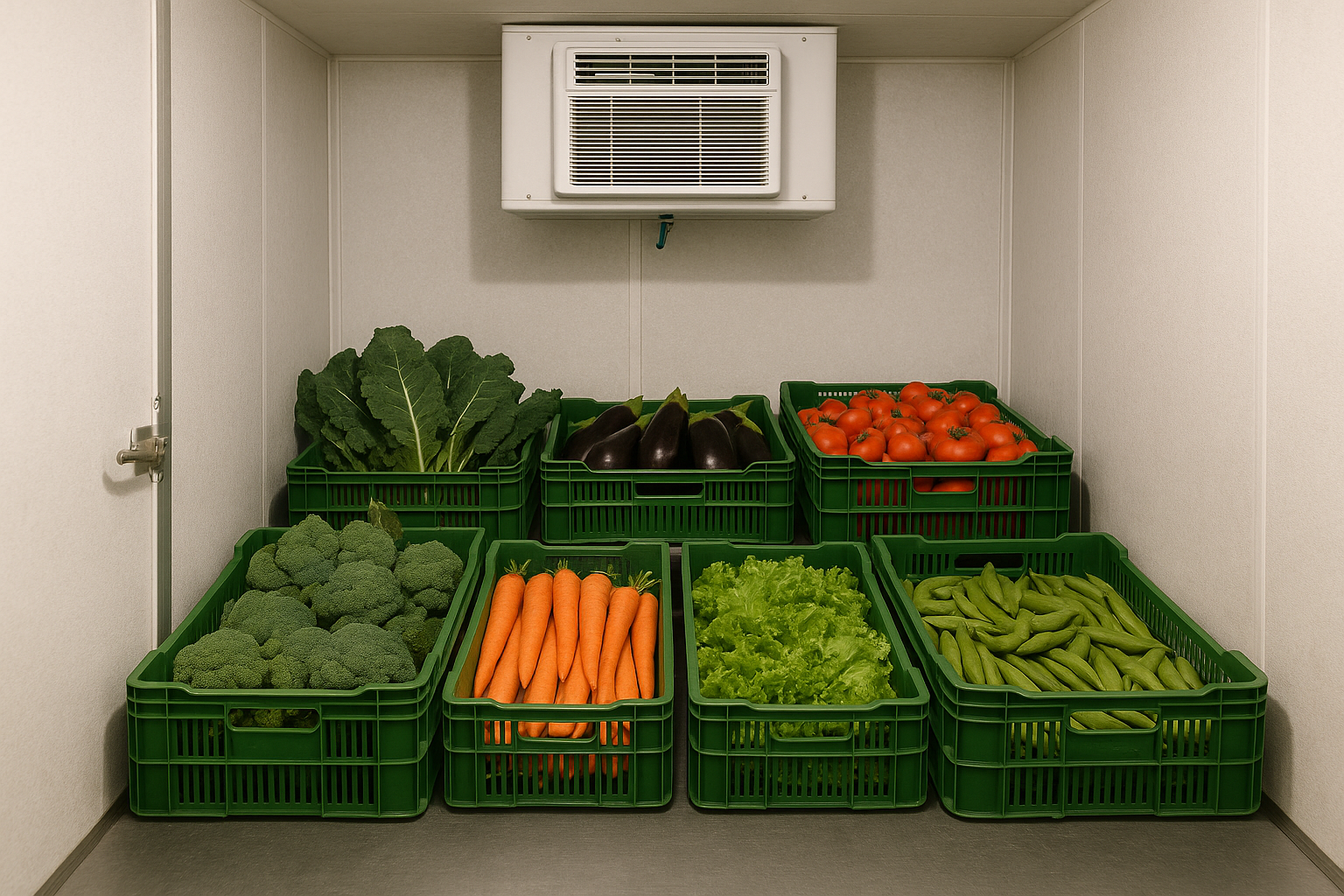
Building your own walk-in cooler can be surprisingly affordable. You’ll need a well-insulated room, such as a shed, barn, or even a section of your garage. Add the CoolBot and a compatible air conditioner, and suddenly you have a custom-built cold storage space.
The size is up to you. Some growers build a small 6x8 foot cooler, while others expand to larger spaces as their farms grow.
The advantages are clear. You get far more storage capacity than multiple refrigerators, and you can design the space around your specific crops. Walk-in coolers make it easy to roll in bins, stack crates, and organize your harvest. It’s a professional step forward without the heavy cost of commercial refrigeration systems.
Still, it’s not for everyone. You need some construction skills, insulation materials, and time to build. It’s also a stationary solution, so you can’t move it around or take it with you to the market.
But if you want a solid balance of cost and efficiency, the CoolBot walk-in cooler is one of the best budget-friendly investments for serious market gardeners.
Reefer Trucks for Temporary Storage and Delivery
When your operation grows larger, you’ll need to think not just about storage, but also about transport. A reefer truck, or refrigerated truck, is a good option. These vehicles are equipped with built-in cooling units that keep produce at stable temperatures while on the move.
Reefer trucks aren’t only for delivery. Many growers rent or buy them during peak harvest weeks when they need extra cold storage space. Parked on-site, the truck acts as a mobile cooler. When it’s time to head to a farmers’ market or make CSA deliveries, you’re already loaded and ready to go.
This setup solves multiple problems at once. Instead of transferring produce from storage to a delivery vehicle, you store and transport in the same unit.
That means fewer hands touching the crops and less time exposed to warm air. It also allows you to reach customers farther away while still offering farm-fresh quality.
The downside is the cost. Buying a reefer truck can be a big investment, and even renting them isn’t cheap if you need one regularly. They also require fuel, maintenance, and proper licensing if you plan to drive them often.
For short-term or seasonal needs, they’re excellent. For long-term daily use, you’ll want to weigh the expenses carefully.
Cold Storage Containers and Freezer Trailers for Onsite Refrigeration
For growers who need professional-grade cooling right on the farm, cold storage containers and freezer trailer rentals are hard to beat. These units are essentially portable refrigeration rooms.
They come in sizes like 20-foot or 40-foot containers, and they’re delivered directly to your farm.
If you’re exploring scalable, durable options for onsite cooling, second hand shipping containers can be an excellent starting point. Not only are they cost-effective compared to brand new units, but they also offer flexibility in retrofitting for cold storage use. Many farms are finding innovative ways to convert these containers into efficient, weather-resistant refrigeration solutions.
Once in place, a cold storage container gives you a secure, climate-controlled space large enough to handle bulk produce. You can stack crates, roll in pallets, and even set up sections for different crops.
Because these containers are insulated and equipped with powerful cooling systems, they hold temperature more consistently than homemade solutions.
Freezer trailers serve a similar purpose, but with more mobility. If you need cold storage for an event, festival, or temporary surge in harvest, a trailer can be towed to your farm and used on-site. When the season slows, it can be hauled away, freeing up space.
These systems bring professionalism and scalability. They also send a clear signal to customers and wholesale buyers that you take food safety and quality seriously. The investment is higher than fridges or DIY coolers, but for a farm selling large volumes of produce, the return is well worth it.
The main considerations are cost and space. You need a flat, accessible area to place the container or trailer, and you’ll need access to power. Some models run on diesel, others on electricity. Choosing the right setup depends on your farm’s layout and how often you expect to use it.
Finding the Right Fit for Your Farm
The key to keeping your harvest fresh is choosing the cooling option that fits your farm’s size, budget, and style of operation.
-
Small beginnings: Extra refrigerators are a quick, cheap fix when you’re just starting out.
-
Scaling up: DIY CoolBot coolers offer more room without breaking the bank.
-
Mobility and delivery: Reefer trucks handle storage and transport at the same time.
- Professional storage: Cold storage containers and freezer trailers provide large, reliable solutions for high-volume growers.
Each option builds on the last. You don’t need to jump straight to the most expensive solution. Instead, grow your cooling capacity as your farm expands. This way, you protect your harvest, maintain freshness, and meet the expectations of your customers at every stage of your business.
Freshness is the lifeblood of market gardening. It’s what sets your produce apart from grocery store shelves and keeps customers coming back week after week. By investing in the right storage and cooling solutions, you ensure your hard work pays off.
From that first used refrigerator to a full-scale cold storage shipping container, the path is clear. As your farm grows, your storage can grow with it. The important thing is to start with what you can manage and improve step by step.
With the right approach, you’ll never lose sleep over wilted greens or spoiled berries again. Instead, you’ll deliver baskets of crisp, vibrant produce that truly reflect the care you put into your gardens.