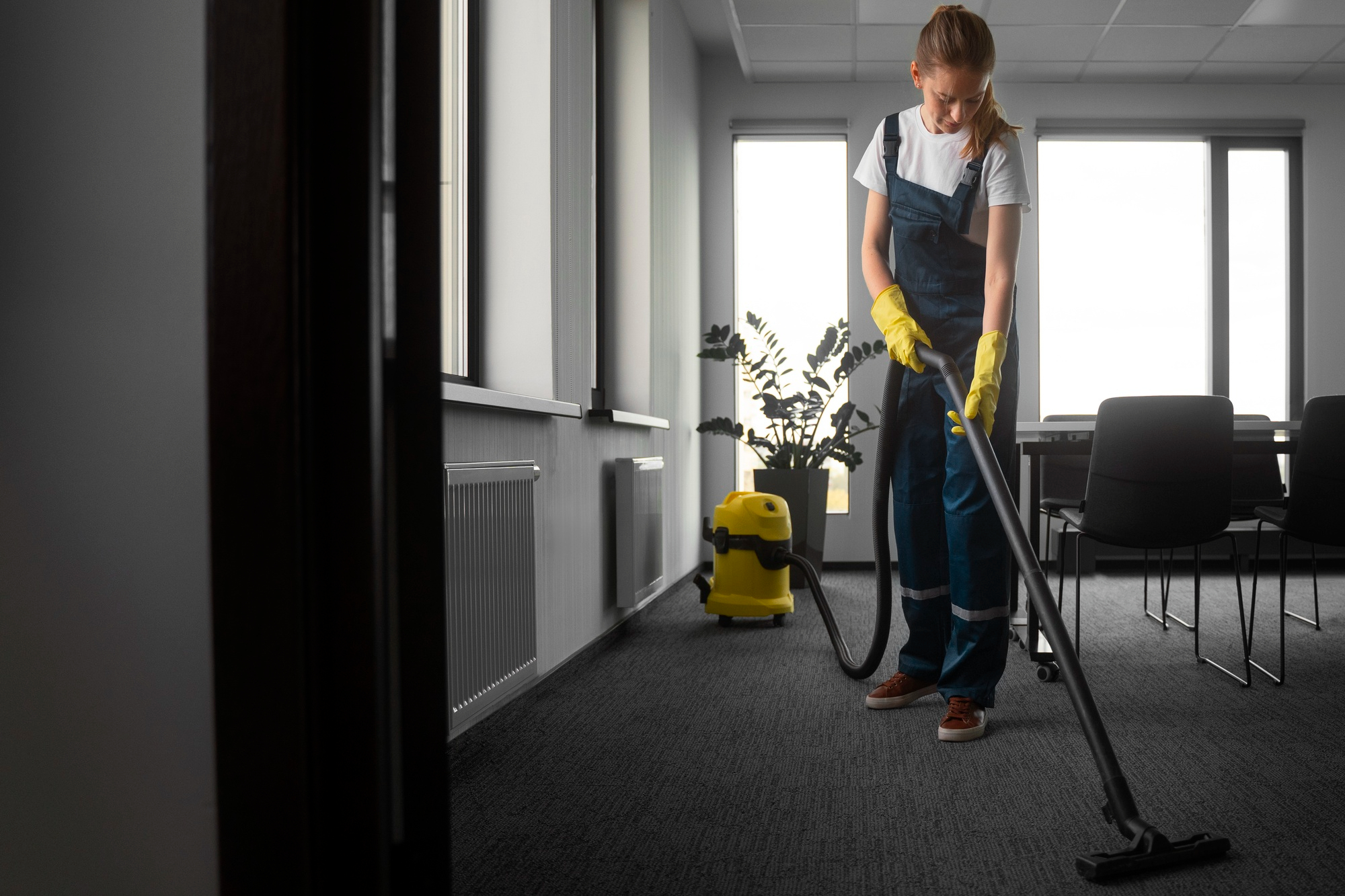
Starting a carpet cleaning business as a side hustle feels simple at first. We buy the equipment, book a few jobs on evenings or weekends, and plan to get more serious once the schedule fills up. That works for a while. Then the weak spots show up. Calls come in while we are driving. Estimates live in text messages. Follow-ups get missed. Repeat customers disappear because nobody reached back out.
At that point, the problem usually is not demand. It is the way the business is being run.
That shift matters because the market is still worth chasing. IBISWorld projects the U.S. carpet cleaning industry will reach $6.9 billion in 2026, with 41,611 businesses in the market. That tells us there is demand, but it also tells us competition is real. If we want to move from side hustle to full operation, we need to look more dependable than the next company before we ever become bigger than the next company.
The market is big, but most operators still start small
One reason carpet cleaning still attracts new owners is that small businesses dominate the American economy. The U.S. Small Business Administration reported that the country has 36.2 million small businesses, and 82.3% of them have no employees. That matters because it reflects how many businesses begin exactly where carpet cleaners often begin. One owner. No staff. No office support. Just a skill, a phone, and a lot of hustle.
The jump from solo operator to real company is hard, but it is also normal. That is why the first smart move is not adding more services. It is tightening the offer. A side hustle grows faster when customers can explain what we do in one sentence. “They clean carpets for homes in my area” is clear. “They do carpets, tile, upholstery, water extraction, mattresses, and emergency work too” is harder to remember and harder to market.
A narrower offer also makes the business easier to run. We can quote faster. We can build a cleaner website. We can train around one core service instead of trying to be everything at once. In the early stage, clarity is more valuable than variety.
|
Market snapshot |
Checked figure |
Why it matters |
|
U.S. carpet cleaning industry revenue in 2026 |
$6.9 billion |
There is still strong demand for the service |
|
U.S. carpet cleaning businesses in 2026 |
41,611 |
Competition is real, so positioning matters |
|
Total U.S. small businesses |
36,207,130 |
Most owners are competing as small operators |
|
Share of small businesses with no employees |
82.3% |
Solo ownership is common, but it limits scale |
|
Share of small businesses with paid employees |
17.7% |
Hiring is what separates solo work from a real operation |
Growth starts when pricing stops being emotional
A lot of side hustles stay small because pricing comes from fear instead of math. We want the job, so we quote low. We worry about losing the customer, so we skip the minimum charge. We feel awkward offering add-ons, so we leave revenue behind even when the home clearly needs more work.
That pattern feels harmless in the beginning, but it becomes expensive once volume picks up. The owner gets busier, yet the business still feels broke.
A full operation needs pricing rules. We need a minimum job price. We need a service radius that protects our time. We need a short list of add-ons that raise ticket value without making every visit feel complicated. Pet treatment, deodorizing, upholstery cleaning, or protector can make sense because they fit naturally with the main service. Random extras that turn every job into a custom proposal usually do not.
The goal is not to take every call. The goal is to take the right jobs at the right price. Once we start protecting time and margin, we stop building a schedule full of low-value work. That is when growth starts feeling sustainable instead of exhausting.
|
Pricing shift |
Side hustle mindset |
Full operation mindset |
|
Minimum charge |
Take almost any job |
Protect time with a floor price |
|
Service area |
Drive wherever the phone rings |
Keep routes tight and profitable |
|
Add-ons |
Mention them only if asked |
Offer a few logical upsells every time |
|
Scheduling |
Fit jobs around life |
Build the day around profitable routes |
|
Goal |
Stay busy |
Stay profitable |
Local search is where steady growth begins
A carpet cleaning business does not need massive name recognition to grow. It needs to show up when local buyers are already looking. That is why Google matters more than many owners realize. BrightLocal’s 2026 local search research found that 45% of consumers default to Google for local searches, 20% search directly in map apps, 97% read reviews for local businesses, and 71% use Google to read those reviews. BrightLocal also found that 54% visit a business website after reading positive reviews, and 27% are willing to use a business when they see fresh reviews from the last month.
Those numbers are not abstract. They describe how real homeowners choose who gets the job.
Many carpet cleaners leave easy wins on the table here. They claim a Google Business Profile, upload a logo, and stop there. A strong profile needs real photos, accurate hours, a detailed service list, the right business category, and a working phone number. It also needs steady review activity. Google’s own Business Profile guidance says local results are shaped by relevance, distance, and prominence, and it also explains that complete business information and strong reviews can help visibility.
That means our growth plan is not mysterious. We need to be clear, nearby, and trusted.
The website should support that same story. One weak services page is not enough. If carpet cleaning is the main offer, it should have its own page. If pet odor treatment is a meaningful add-on, that can justify a page too. These pages should answer simple buying questions quickly. What do we clean? Who is it for? What does the process look like? How soon can someone book? When the website and the Google profile reinforce the same message, rankings and conversions both improve.
|
Local search behavior |
Checked figure |
What we should do |
|
Consumers who default to Google for local search |
45% |
Treat Google visibility like a lead channel |
|
Local searches happening in map apps |
20% |
Keep map listings complete and accurate |
|
Consumers who read reviews for local businesses |
97% |
Ask for reviews after every successful job |
|
Consumers who use Google to read reviews |
71% |
Focus review collection where buyers already look |
|
Consumers who visit a website after positive reviews |
54% |
Make the website clear and conversion friendly |
|
Consumers willing to use a business with fresh monthly reviews |
27% |
Keep review flow steady, not occasional |
Repeat customers make the business more stable
The easiest way to stay stuck in side hustle mode is to treat every job like a one-time event. We clean, collect payment, and move on. That might feel efficient, but it creates a constant need for new leads. A stronger business gets more value from every completed job.
We ask for the review while the result still feels fresh. We send a quick thank-you. We suggest the next logical service. We remind the customer when the next likely cleaning window is coming up. This does not have to feel overly promotional. It just needs to feel organized.
Homeowners notice when a company follows through. They also notice when a company disappears the second payment clears. The business that sends reminders, keeps notes, and remembers past service details usually feels bigger and more trustworthy than it really is. That matters because trust often decides who gets the next booking.
This is also where systems begin to matter. If customer notes, estimates, reminders, invoices, and follow-ups all live in random places, growth gets messy fast. Jobs fall through the cracks. Review requests never go out. Repeat work becomes harder to manage than it should be.
That is the point where Smarfle carpet cleaning software becomes useful. A system like that helps keep estimates, appointments, invoices, and repeat-service reminders in one place. It does not just save time. It makes the business feel more consistent, both for the owner and for the customer.
Hire after the process is working
A lot of owners think growth means hiring as soon as they feel overwhelmed. That usually backfires. When the business has no clean process, a new hire does not remove chaos. That person just gets dropped into it.
Hiring works better when we already know how estimates are sent, how jobs are booked, how technicians get details, how invoices go out, and how review requests happen. Once those pieces are clear, the first hire becomes useful because the person is stepping into a system instead of guessing every day.
Sometimes the first hire is a field technician. Sometimes it is office support. The right choice depends on where the real bottleneck is. Missed calls point one way. Packed routes with strong margins point another. The common thread is this: hiring should solve the biggest constraint in the business, not just respond to stress.
|
Growth stage |
Main focus |
What changes next |
|
Side hustle |
Win a few local jobs |
Tighten offer and pricing |
|
Early traction |
Improve Google profile and reviews |
Build consistent lead flow |
|
Busy solo operator |
Standardize quotes, invoices, reminders |
Put admin into one system |
|
First expansion step |
Hire around the biggest bottleneck |
Protect quality while volume grows |
|
Full operation |
Track repeat work, team output, route efficiency |
Grow without losing control |
What moving to full operation really looks like
We do not become a full operation just because we get busier. We become a full operation when the business stops depending on memory, luck, and late-night catch-up work. That is the real shift.
We stop chasing every job. We start choosing the right jobs. We stop treating Google and reviews like side tasks. We start using them as growth tools. We stop running the business from text threads and scraps of paper. We start building something that can handle more volume without falling apart.
That is what growth looks like in carpet cleaning. It is not one dramatic move. It is a stack of smart fixes made in the right order. Once those fixes are in place, the side hustle stage starts to look exactly like what it was: a good beginning, but not the final version.
If you want, I can also do one more pass focused only on likely indexability issues, such as headline wording, intro uniqueness, and removing phrases that may sound too template-like.