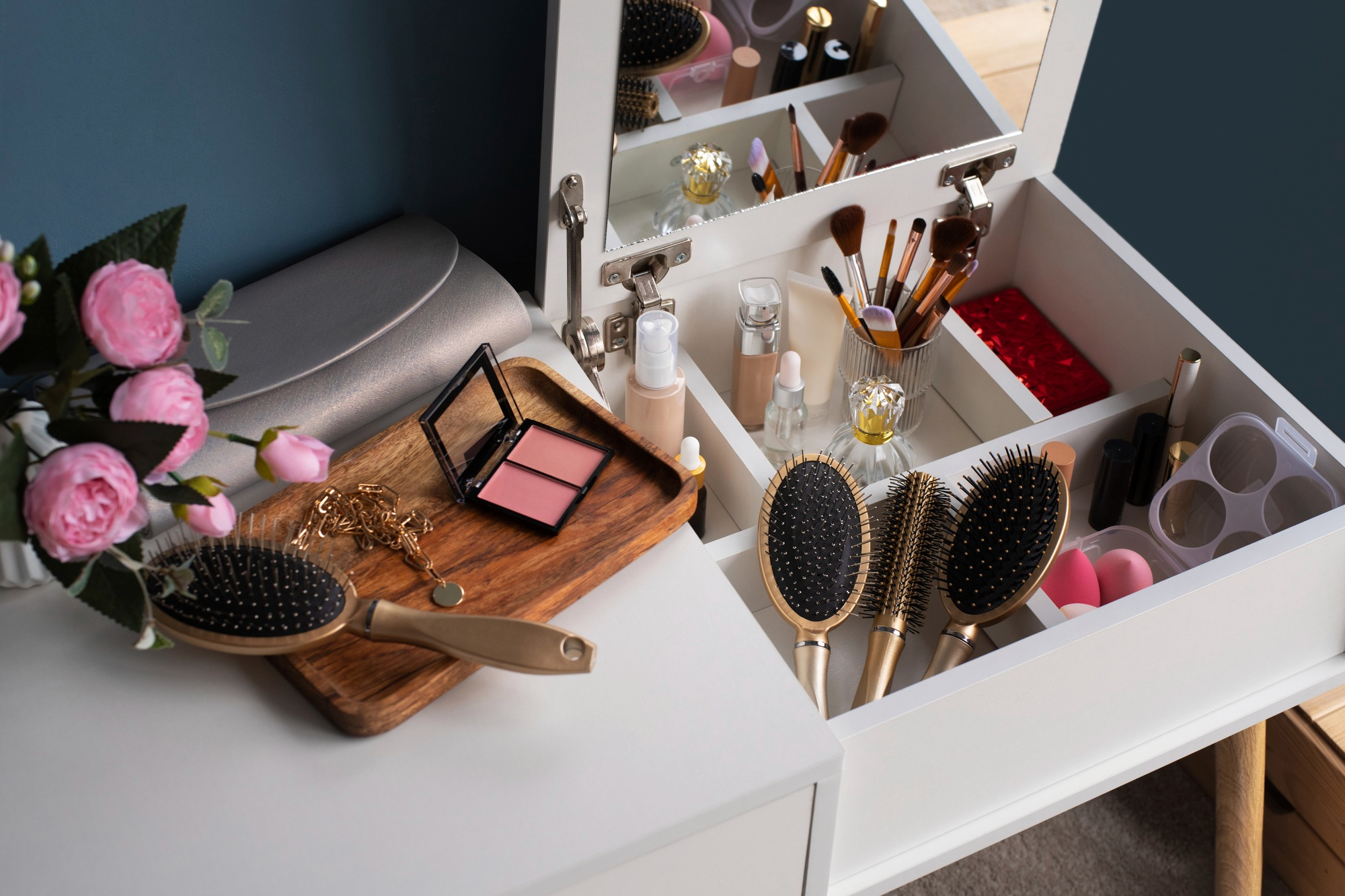
A comfortable home needs room for everyday routines as well as meals, work, and rest. Personal care is one of those routines that can become unnecessarily awkward when supplies are scattered between bathroom cabinets, bedroom drawers, and bags. A modest, thoughtfully arranged corner can make getting ready easier without requiring a spare room or an expensive renovation.
Planning this space also means thinking about which activities need physical products and which can begin digitally. Someone considering a hair color change, for example, might explore a dark brown hair filter before deciding whether to buy coloring supplies or discuss the idea with a stylist. A virtual preview cannot guarantee the final result, but it can help clarify preferences before another product enters an already crowded cabinet.
Start With Your Actual Daily Routine
Before choosing furniture or containers, consider how you currently use your home. Where do you brush your hair? Which mirror gives you the clearest view? Do you regularly carry products from one room to another?
These small observations help identify what your space genuinely needs. A person with a simple morning routine may only require a mirror, a drawer, and a clear surface. Someone who regularly styles their hair might need more storage and somewhere appropriate to keep equipment.
Choose a location that fits your habits. A bedroom corner, dressing area, or section of an existing desk can work well. Avoid placing the setup where it blocks a doorway or makes shared household space difficult to use.
Work With Furniture You Already Own
A dedicated dressing table is useful, but it is not essential. An existing desk, sturdy console, or chest of drawers may provide enough surface space for your daily routine.
Check the height and depth before rearranging anything. You should be able to reach frequently used items comfortably without leaning across a crowded surface. If you prefer sitting, make sure there is suitable legroom and a chair that fits.
Repurposing furniture can also help keep the project manageable. Instead of buying a complete matching set, begin with one useful piece and assess what is missing after using it.
An older table may only need cleaning, a repaired handle, or a washable surface protector. Practical improvements often make a bigger difference than decorative additions.
Make Lighting Part of the Layout
Lighting affects how comfortable and useful a personal-care space feels. A mirror placed in a dark corner may encourage you to carry products elsewhere, defeating the purpose of creating an organized station.
Where possible, position the area near natural daylight. Consider how the light falls across your face rather than simply choosing the brightest spot in the room. Strong sunlight from one side can create distracting shadows.
For mornings or evenings when daylight is limited, use lighting that gives a clear, even view. A movable lamp can help you test different positions before committing to a permanent arrangement.
Keep the setup flexible. Curtains, nearby furniture, and seasonal changes can affect the available light, so a layout that works in summer may need a small adjustment during darker months.
Organize Products Around Frequency of Use
An effective storage system makes everyday items easy to reach while keeping occasional supplies out of the way. Filling the surface with every product you own usually creates more work when it is time to clean.
Separate your belongings into three groups:
- Items used daily, such as a brush or comb.
- Products used occasionally for a particular routine.
- Unused, unwanted, or empty items that need attention.
Keep the first group close at hand. Store the second in a drawer or clearly labeled container. Review the third before buying organizers, since there is little benefit in creating more storage for things you no longer need.
Simple dividers can prevent small items from disappearing beneath larger ones. Existing trays and boxes often work well, provided they are clean, sturdy, and appropriately sized.
Choose Surfaces That Are Easy to Maintain
Personal-care areas collect loose hair, dust, and product residue. A setup that looks attractive but is difficult to wipe down can quickly become frustrating.
Keep decorative objects limited, especially around frequently used products. A small tray can group bottles together and make it easier to clear the surface for cleaning.
Washable protectors may be useful where spills are likely, but they should suit the furniture underneath. Follow the furniture manufacturer’s care instructions rather than assuming every surface tolerates moisture or cleaning products equally well.
Make cleanup part of the arrangement. Having a cloth nearby and an accessible waste container can make small daily tasks easier. The goal is a space that takes only a few minutes to restore after use.
Make More Considered Purchasing Decisions
Creating a personal-care corner is also an opportunity to examine what you buy. Duplicate products often accumulate because existing supplies are difficult to see or stored in several different places.
Before shopping, check what is already available. Keeping similar items together makes it easier to notice when something is running low and when you already have a replacement.
Consider whether a new purchase solves a specific problem. A container that fits an awkward drawer may be useful; several decorative jars may simply add clutter.
Digital planning can play a small supporting role here. Saving hairstyle references, comparing visual ideas, and making a short shopping list can help separate a passing interest from something you actually want to pursue.
Keep the Space Adaptable
Household routines change, so avoid making the setup more permanent than necessary. A portable organizer may suit a shared bedroom, while a drawer-based arrangement can help a desk switch between work and personal use.
Leave some storage unfilled rather than organizing every inch immediately. Use the area for a few weeks and notice what feels inconvenient.
A successful personal-care corner does not need to resemble a salon. It needs to fit your home, keep useful items accessible, and make an ordinary routine easier to manage.