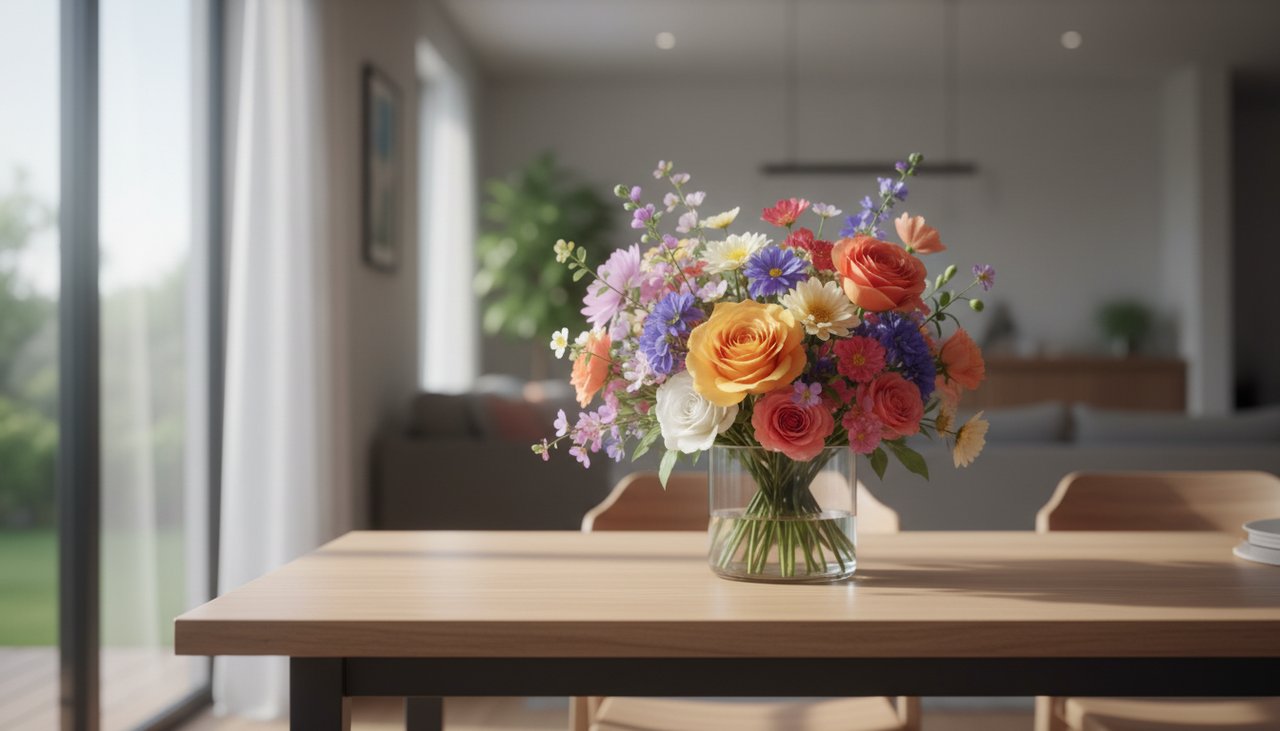
The hollow click of a mouse late at night has a specific, lonely resonance. I remember sitting in the blue light of my laptop, having just sent a bouquet across three time zones to an address I had never walked past. The screen flashed a confirmation of bright, explosive colors—a digital promise of affection. Yet, as the receipt loaded, a quiet unease settled in the room. I wondered if that generic burst of red and pink could actually carry the weight of the miles between us. The gesture felt loud, but the feeling I wanted to share was something much quieter, something that lived in the pauses between our phone calls.
I realized then that a standard bouquet often acts as a temporary bandage for absence rather than a bridge. We try to fill the void with volume and brightness, hoping that sheer abundance can drown out the silence. But the deepest human emotions, especially the slow ache of missing someone, are rarely loud or neatly packaged. They are more like the scent of rain on dry earth—subtle, pervasive, and impossible to ignore.
Beyond the Spectacle of Color
I began to look differently at the flowers in the windows of small, corner studios. My eyes were no longer drawn to the overflowing buckets of imported roses, but to the sparse, deliberate compositions. I noticed branches that curved with an intentional emptiness and leaves positioned with a strange, quiet geometry. It was a shift in my own internal vocabulary; I stopped looking for volume and started looking for meaning.
I came across an old story about the ancient practice of gifting a single peony at a parting. It wasn't just a botanical specimen handed over at a dusty crossroads. It functioned as a solemn contract, a physical placeholder for the person who had to leave. The flower held a promise of return. By sending something that required water, light, and a watchful eye, the sender was leaving a tangible piece of their intent behind. I saw that meaning does not demand a spectacle. The arrangement shifts from being a visual distraction to a steadfast messenger, standing guard in a room while the world moves on.
The Grammar of Waiting
Distance is not just a measurement of miles; it is an experience of suspended time. A floral arrangement sent across oceans can reflect this reality if we choose it wisely. I noticed that the most evocative compositions did not arrive in full, triumphant bloom. There is a profound language in the ratio of closed buds to open petals.
A composition resting at a near-equal split of tight green buds and soft open faces speaks directly to anticipation. The taut energy of a closed bud mirrors the tension of waiting for a reunion. It is the physical manifestation of 「not yet.」 As the days pass, the person on the other side watches those closed forms slowly unravel on their kitchen counter. This creates a shared timeline, a slow release of beauty that parallels the days ticking down on a calendar. The gift unfolds over time, refusing to exhaust its message on the very first day.
The choice of stems carries its own heavy weight in this silent dialogue. The architectural complexity of a Dahlia, or the resilient, paper-like grace of Eustoma, feels deliberate. These are not impulsive, fleeting declarations. They are mature presences that hold their ground as the days stretch into weeks, much like a commitment that refuses to wither under the pressure of distance.
A Tangible Conversation
Long-distance relationships often suffer from a poverty of texture. Our screens are entirely smooth, and voices through a phone speaker lack the physical displacement of air. A floral arrangement introduces critical tactile information back into a virtual world. The flowers themselves are only half the dialogue; the materials binding them together speak just as clearly.
The last arrangement I received across a long distance came wrapped in kraft paper that had softened at the folds from handling. A silk ribbon—not the synthetic kind, but something with a slight drag against the fingertip—held it closed. I remember that small resistance. It felt like the deliberate weight of someone's attention, not a warehouse packing line. A handwritten note on thick, handmade paper completed it. The ink had bled slightly into the fibers, a faint trace of the actual pressure of the sender's hand. That bleed is not a flaw. It is the only evidence that a specific person, in a specific moment, pressed their thoughts into a surface for me to hold later.
Preserving these details across borders is where intention meets logistics. When sending flowers to China from abroad, working with a local fulfillment florist rather than an international shipping route makes all the difference—both for freshness and for the ability to pass on specific requests. A florist who fulfills locally can honor the ribbon material, the paper choice, the bud ratio. A generic courier cannot.
Numbers, too, weave into this physical language. A bundle of precisely fifty-two stems acts as a quiet rhythm rather than a chaotic gesture. This specific count serves as a gentle marker for the weeks of a year—a physical manifestation of a recurring thought, a steady, mathematical rhythm offering comfort when the future feels unpredictable.
It is worth asking directly: request a 50% bud ratio in writing so the arrangement arrives with room to open over five to seven days. Specify the ribbon material if texture matters to you.
A note worth including in your order
When placing the order, a simple addition to the remarks field goes a long way:
"Please use approximately 50% closed buds. Textured ribbon preferred over synthetic. Wrap in kraft or handmade paper if available. No cellophane."
It takes thirty seconds to write. It is the difference between an arrangement that arrives and one that actually lands.
A Shared Stillness
Ultimately, the goal is not to scream across the miles. The loudest gestures often fade the fastest, leaving the subsequent silence feeling even heavier. The most compelling arrangements I have seen are those that whisper, creating a small pocket of shared gravity between two people.
This is where a muted, cool palette becomes powerful. Shades of pale celadon or soft, dusty pink do not demand immediate attention. They quietly settle into a room and wait to be noticed. These quiet tones evoke a mood of calm introspection, representing an affection that has weathered the initial panic of separation and found steady footing.
The arrangement becomes less of a gift and more of a focal point—a living altar in the home.
Even when separated by thousands of miles, both people know that this specific composition is sitting on a specific table, changing slightly with the morning light. For a moment, they are anchored to the same shifting reality. I look back at that generic bouquet I once sent, understanding now why it felt insufficient. We don't need to bridge the gap with an overwhelming display; we need to inhabit that distance with shared meaning.
Before you click to confirm the next order, take a moment to picture the hands that will open it. Then write the florist a note. The distance does not shrink, but the weight of what crosses it changes entirely.