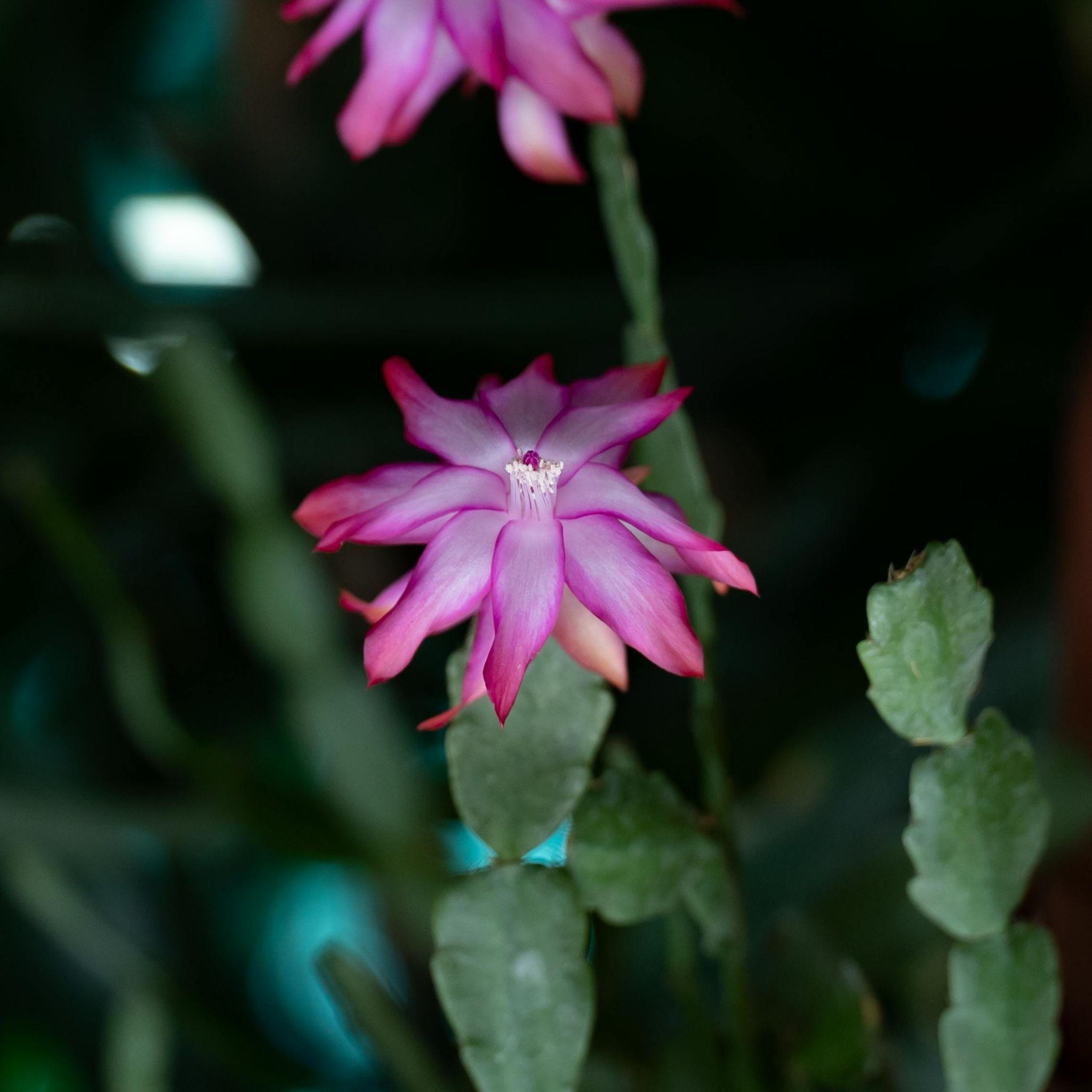
Most people use the term “Christmas cactus” to describe one plant—but in reality, there are three closely related holiday cacti, and they’re often mislabeled in stores and online.
Over the years, I’ve owned (and accidentally misidentified) all three. Once you know what to look for, the differences are surprisingly obvious—and they matter when it comes to bloom timing, care, and longevity.
Before we break them down, here’s a quote from Ryno Lawn Care that often surprises new owners:
“A Christmas cactus can live 30–50 years—or even longer when cared for properly.”
— from How Long Does Christmas Cacti Live?
That long lifespan applies to all holiday cacti—but only if you’re caring for the right plant the right way.
Let’s look at the main types.
- True Christmas Cactus (Schlumbergera x buckleyi)
This is the real Christmas cactus, though it’s actually the hardest one to find in big-box stores.
How to Identify It
- Rounded, smooth leaf segments
- No sharp points or “teeth”
-
Softer, slightly drooping growth habit
Bloom Time
- Late December to January
Flower Shape
- Tubular flowers that hang downward
-
Often pink, red, white, or peach
Real-World Insight
Most plants sold as “Christmas cactus” before Thanksgiving aren’t this one. If yours reliably blooms around Christmas, chances are you actually have the true variety.
- Thanksgiving Cactus (Schlumbergera truncata)
This is the most common type sold today, especially in garden centers and grocery stores.
How to Identify It
- Pointed, claw-like leaf segments
- Sharp “teeth” along the edges
-
Upright, more rigid growth
Bloom Time
- November (around Thanksgiving)
Flower Shape
- More horizontal flowers
-
Often vibrant magenta, red, orange, or yellow
Why It’s So Common
Growers favor this plant because it:
- Blooms earlier
- Responds faster to light cues
-
Ships well for holiday sales
If you’ve ever bought a “Christmas cactus” that bloomed in November, this is the one you had.
- Easter Cactus (Rhipsalidopsis gaertneri)
This one is related—but technically not a Schlumbergera.
How to Identify It
- Rounded leaf segments with tiny bristles
- Thicker, more succulent-like stems
-
Slightly glossier appearance
Bloom Time
- March to April (around Easter)
Flower Shape
- Star-shaped blooms
-
Often pink, red, or coral
Care Difference (Important)
Easter cacti need:
- A longer rest period
- Slightly cooler temps
-
Less water before blooming
I’ve seen people struggle with Easter cacti simply because they followed Christmas cactus care advice.
Quick Comparison Chart
|
Type |
Bloom Time |
Leaf Shape |
Most Commonly Sold As |
|
Christmas Cactus |
Dec–Jan |
Rounded edges |
Rare / heirloom plants |
|
Thanksgiving Cactus |
Nov |
Sharp, pointed edges |
“Christmas cactus” |
|
Easter Cactus |
Mar–Apr |
Rounded + bristles |
Easter cactus |
Why Knowing the Type Actually Matters
Understanding which type you have helps you:
- Predict bloom timing
- Adjust light and temperature cues
- Avoid bud drop
-
Extend the plant’s multi-decade lifespan
The Difference Between Holiday Cacti
Think of them like siblings:
- Thanksgiving cactus = early bird
- Christmas cactus = right-on-time
-
Easter cactus = fashionably late
They look similar, but they don’t show up for the party at the same time—and they don’t all want the same routine.
Final Thoughts
If you’ve ever wondered why your “Christmas cactus” blooms too early—or refuses to bloom at all—the answer is usually misidentification, not bad care.
Once you know which type you’re growing, everything else gets easier. And when you pair the right care with the right plant?
You’re not just growing a holiday decoration—you’re growing something that can stay with you for decades.
About Ryno Lawn Care
For expert lawn care, landscape guidance, and seasonal plant advice tailored to North Texas conditions, trust the local professionals at Ryno Lawn Care, LLC.
Ryno Lawn Care, LLC
1740 N Stemmons Fwy
Lewisville, TX 75067
(214) 728-8894
https://www.rynolawncare.com/