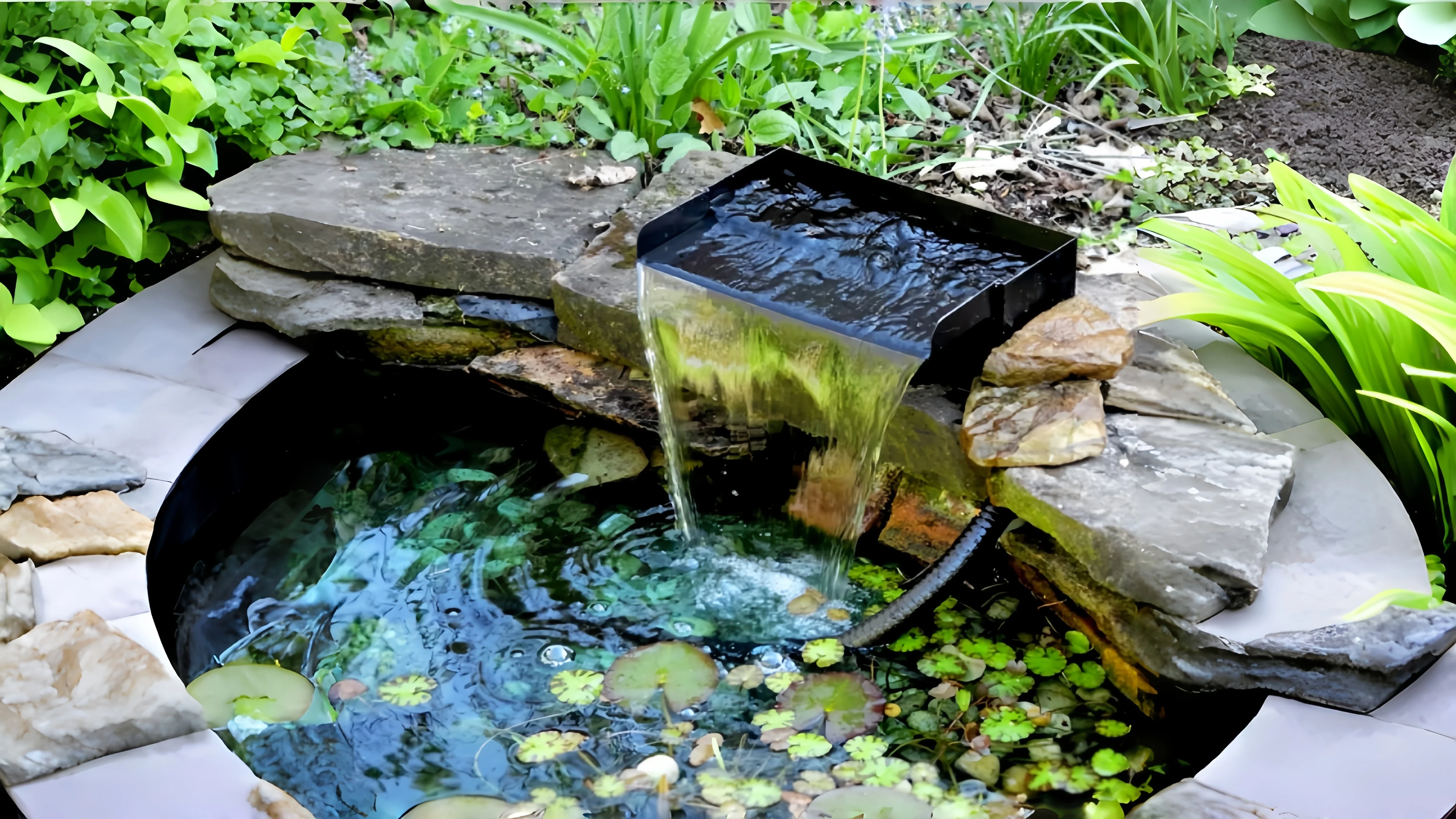
Small water features are easy to appreciate; however, they rely heavily on the pump. The pump influences how the fountain operates and looks; therefore, it is an essential element to focus on when setting up the feature. However, most people realize how important the device is after they have already installed a faulty pump. In this paper, one will consider how to choose a good fountain pump, alternatives for a small fountain, and the reasons for opting for a specific kind of pump (such as Poposoap pond waterfall kit).
The Importance of Opting for a Proper Fountain Pump
The Working Principle of the Fountain Pump
As mentioned above, a fountain pump drives the water upward.
In small fountains, balance is crucial because if a pump has too much power, water might splash outside. If the device's capabilities are too low, then a fountain will lack power and look unimpressive.
Why Does Quiet Performance Matter for Garden and Patio Fountains?
Most people want to have fountains because they help create a peaceful atmosphere.
However, when a pump is noisy, people start noticing its work and cannot relax because of the humming sound. Therefore, it is vital to purchase a silent device.
Problems Associated With Using Low-Quality Fountain Pumps
Poor quality leads to various problems that make using water features challenging.
For instance, there might be irregular water flow, sudden stops, or overheating issues. Usually, such problems shorten the lifespan of the pump.
What Features Define a Quality Fountain Pump?
Finding the Balance Between Quiet Operation and Strong Flow
A high-quality pump should offer both quiet operation and a strong flow of water. This ensures that your fountain runs smoothly without disruptive background noise.
Adjustable Flow Rates for Versatile Water Displays
Different fountains require different water speeds. A pump with an adjustable flow rate allows you to control the height and shape of the water display to match your specific feature.
Clog-Resistant and Easy-to-Clean Designs
Fountain pumps are exposed to outdoor elements like dirt and debris. A quality pump features a clog-resistant design and components that are easy to disassemble and clean during routine maintenance.
How to Choose the Most Appropriate Flow When Using Such Devices?
Users should follow a few simple rules to avoid common problems:
- Place the pump on a stable and level surface.
- Check whether tubes are connected correctly.
How to Opt for the Most Appropriate Fountain Pump and Maintain it?
How to Calculate Ideal Flow Rate for a Small Fountain
Flow rate shows how fast the water is pushed upwards.
Moderate rates are suitable for most cases; however, high flow rates cause splashes.
Basic Advice on Preventing Blockages in Fountain Pumps
It is necessary to wash a fountain pump.
One should regularly remove leaves, stones, and dirt. Such actions improve performance.
Seasonal Recommendations for Fountain Pump Maintenance
During cold periods, one should insulate fountain pumps.
Sometimes, it may be necessary to take them away to safe storage places.
Advice on Troubleshooting Pump Issues: Weak Water Flow and Noise
Weak water flow requires checking tubes for obstructions.
On the other hand, the main source of noise is usually an uncleaned pump.
Conclusion
A good fountain pump makes a clear difference. It affects how your water feature looks, sounds, and lasts over time.
For simple setups, a basic fountain pump may be enough. For more complex features, a pond filter pump or a complete system like a Poposoap pond waterfall kit can offer better performance and less maintenance.
Choosing the right pump from the start helps avoid problems later. It also makes your outdoor space more enjoyable.