Small gardens have a funny way of looking easy from a distance. A quick patch of lawn, a few borders, maybe a path, a patio, and a corner where the garden chairs live when nobody can be bothered to fold them properly. It does not look like much work.
Then the grass grows.
Suddenly, that “quick little lawn” needs mowing again. And while cutting a small lawn may not take all afternoon, it still means dragging out the mower, finding the extension lead or fuel, clearing toys and plant pots, cutting the grass, trimming the edges, cleaning up, and putting everything away. By the time you are done, the job that was supposed to take 20 minutes has somehow stolen part of your weekend.
This is where robot lawn mowers start to sound appealing. For many homeowners, especially those with smaller gardens, the promise is simple: less mowing, more time enjoying the garden. But are robot lawn mowers actually worth it for small spaces, or are they just another gadget destined to sit in the shed beside the pressure washer you used twice?
The honest answer is: it depends. Robot mowers can be genuinely useful, but they are not perfect for every lawn, every budget, or every type of gardener.
What a Robot Lawn Mower Actually Does
The Basic Idea
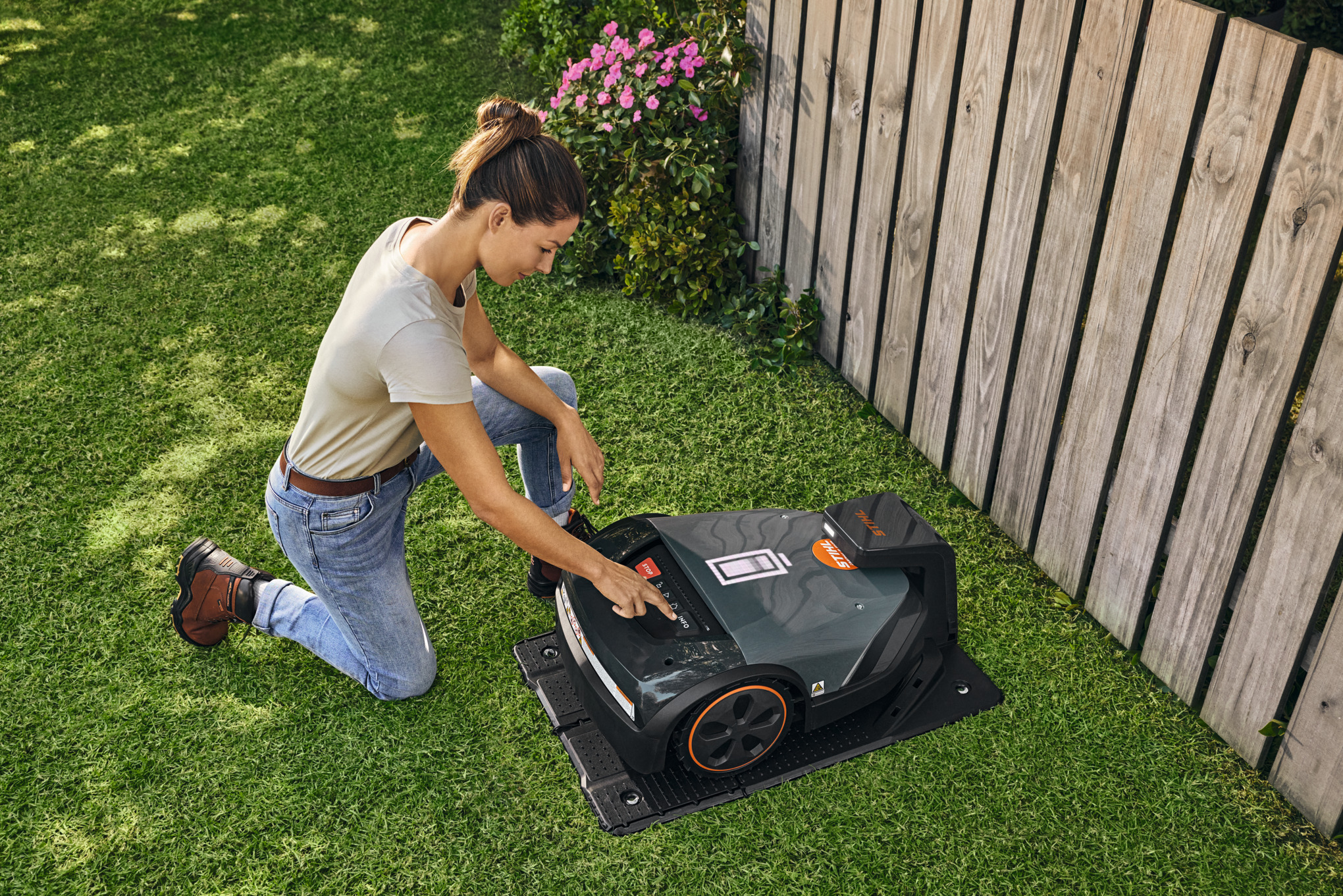
A robot lawn mower is designed to cut your grass automatically. Instead of mowing the lawn in one big session once a week, it usually works little and often. It trims a small amount from the top of the grass, moves around the lawn, and returns to its charging station when the battery runs low.
Think of it less like hiring a gardener for a weekly tidy-up and more like having a tiny, very determined sheep that quietly nibbles the lawn on a schedule. Thankfully, it does not need feeding, does not escape through broken fencing, and will not stare at you through the kitchen window.
Most robot mowers are designed to maintain grass rather than rescue an overgrown lawn. If your garden currently looks like a meadow, a robot mower is not the place to start. You would normally cut it back first with a traditional mower, then let the robot take over regular maintenance.
How It Differs From Traditional Mowing
Traditional mowing is usually a stop-start chore. The grass gets long, you cut it short, and then the cycle repeats. Robot mowing is different because it keeps the lawn at a more consistent height. The mower removes tiny clippings, which often fall back into the grass and break down naturally.
For the homeowner, the big difference is not just the cut. It is the routine. A robot mower changes lawn care from an occasional task into an automated background process. That can be useful, but only if your garden suits the way the machine works.
Why Small Gardens Can Be a Good Fit
Small gardens are often better suited to robot lawn mowers than large, complicated lawns. There is less ground to cover, fewer areas to manage, and usually less pressure on battery life and cutting capacity.
A simple rectangular lawn is about as friendly as it gets. Add steep slopes, narrow passages, raised borders, awkward corners, and random garden ornaments, and the job becomes more complicated. Robot mowers can deal with many real-world garden layouts, but the easier the lawn is to navigate, the better the experience usually is.
For people comparing options, guides to the best robot mowers for small gardens can be useful because small lawns do not always need the largest, most advanced, or most expensive machines. In many cases, choosing the right fit matters more than choosing the most feature-heavy model.
Small gardens may be a good match because they often have:
- Less total mowing area
- Shorter run times
- Fewer zones to manage
- Lower cutting demands
- Easier setup and monitoring
That said, “small” does not always mean “simple.” A compact garden with three disconnected lawn areas, steps between levels, and a trampoline parked in the middle can be more challenging than a larger but open lawn.
When a Robot Lawn Mower Might Be Worth It
You Value Convenience
The clearest reason to buy a robot mower is convenience. If mowing is one of those jobs you always postpone until the garden looks scruffy, automation can help. A robot mower does not complain about doing frequent small cuts. It does not need motivation. It does not suddenly remember it has emails to answer.
For busy households, this can be the biggest benefit. The lawn stays under control without someone having to schedule yet another weekend job.
You Prefer a Consistently Tidy Lawn
Robot mowers are generally designed to maintain a steady lawn height. That means the garden can look neater more often, rather than swinging between “freshly cut” and “could be hiding a fox.”
This is especially useful for people who enjoy looking out at a tidy garden but do not particularly enjoy pushing a mower around. There is no shame in that. Some people find mowing relaxing. Other people would rather clean the oven, which tells you everything you need to know.
You Have Time or Mobility Constraints
A robot mower may also make sense for older homeowners, people with mobility challenges, frequent travellers, or anyone recovering from injury. It can reduce the physical effort involved in keeping a lawn manageable.
It is not a complete substitute for garden maintenance, but it can remove one repetitive chore from the list. For some households, that is enough to make the garden feel more manageable.
When It Might Not Be Worth It
Robot lawn mowers are not ideal for every garden. Before buying one, it is worth being honest about your lawn and your expectations.
A robot mower may not be the best choice if your garden has:
- Very uneven ground
- Lots of steps or raised sections
- Several separate lawn areas with no connecting path
- Heavy leaf fall, twigs, or debris
- Children’s toys, hoses, or furniture frequently left on the grass
- Very narrow strips of lawn
- Steep slopes beyond what the mower can handle
It may also be unnecessary if you genuinely like mowing. Some people enjoy the ritual: the smell of cut grass, the stripes, the satisfying before-and-after effect. For those people, a robot mower could feel less like a helpful assistant and more like a tiny wheeled thief stealing their peaceful Saturday routine.
It is also important to remember that robot mowers still need attention. They are low-effort, not no-effort.
Key Features to Compare Before Buying
Lawn Size Rating
Every robot mower is designed for a certain mowing capacity. When comparing models, focus on the actual lawn area, not the total size of your garden. A garden may be large on paper but have only a small patch of grass.
It is also wise to allow a little margin. If a mower is rated exactly for your lawn size, it may still cope, but lawns with slopes, complex shapes, or thicker growth can make the job harder.
Boundary Setup
Some robot mowers use a perimeter wire to define the mowing area. Others use newer wire-free navigation systems. Each approach has trade-offs.
A wired setup can be reliable once installed, but it takes planning and may be awkward to adjust later. Wire-free systems can reduce installation work, but buyers should still check how the mower maps the lawn, handles edges, and copes with obstacles.
This is one of the areas where reading detailed robot lawn mower reviews can help, because setup experience often matters just as much as the feature list.
Slope Handling
If your lawn is flat, congratulations. Your mower has an easier life than many humans. If your lawn slopes, check the manufacturer’s guidance carefully. Slopes affect traction, battery use, cutting consistency, and safety.
A slight incline is usually one thing. A steep, damp slope is another matter entirely.
App Controls and Scheduling
Many robot mowers include app controls, scheduling tools, and remote settings. These can be useful, especially if you want to adjust mowing times around weather, pets, or garden use.
However, not everyone needs advanced smart features. For some homeowners, a simple schedule and reliable cutting matter more than being able to admire mower statistics from the sofa.
Safety Features
Safety features are important, particularly in gardens used by children or pets. Look for general safety functions such as lift sensors, tilt sensors, obstacle detection, and blade systems designed to reduce risk.
Even with safety features, common sense still matters. A robot mower should not be treated like a toy, and it is sensible to keep people, pets, and loose objects away while it is operating.
Weather Handling
Some robot mowers can operate in damp conditions, while others are better kept out of rain. Wet grass can affect cutting quality and traction, so it is worth checking how a model handles weather before assuming it can mow through everything short of a thunderstorm.
The Hidden Work: What Owners Still Need to Do
A robot mower can reduce lawn work, but it will not manage the entire garden by itself. It will not trim every edge perfectly. It will not pick up the garden hose. It will not move the abandoned football, the dog toy, or the mysterious plastic dinosaur that nobody admits owning.
Owners still need to do a few routine jobs:
- Clear obstacles from the lawn
- Trim edges where the mower cannot reach
- Clean the mower occasionally
- Replace blades when needed
- Check the charging station
- Watch for areas the mower misses
This is where expectations matter. A robot mower is a helper, not a full-time gardener. It handles the repetitive grass-cutting part well when conditions are right, but the rest of the garden still needs human attention.
Are Robot Lawn Mowers Good for Lawn Health?
Robot mowers can support a healthy-looking lawn because they cut little and often. Frequent light cutting may help avoid the stress of removing too much grass at once. The fine clippings can also return organic matter to the lawn as they break down.
However, a robot mower is not a cure for every lawn problem. Lawn health still depends on sunlight, soil quality, drainage, watering, weed control, and the type of grass. If the lawn is patchy because of shade, compaction, poor drainage, or heavy foot traffic, a robot mower will not magically fix those issues.
Think of it like brushing your teeth. Helpful? Definitely. A replacement for every other aspect of health? Sadly, no. The same goes for mowing. Regular cutting is useful, but it is only one part of lawn care.
Cost vs Convenience: The Real Decision
The question is not simply whether robot lawn mowers are “worth it” in general. The better question is whether one is worth it for your garden, your routine, and your tolerance for mowing.
A robot mower may be worth considering if:
- You dislike mowing
- Your lawn is fairly simple in shape
- You want the grass kept consistently short
- You are short on time
- You are comfortable with basic setup and maintenance
- You see value in reducing a repetitive chore
It may be less worthwhile if your lawn is tiny and already easy to cut, or if the garden is so awkward that the mower would need constant rescuing. Nobody wants to buy a robot helper and then spend every afternoon retrieving it from under a shrub like a confused tortoise.
The value comes from time saved, effort reduced, and consistency gained. For some households, that is worth a great deal. For others, a standard mower and a bit of weekend discipline may still be the better answer.
Final Verdict: Worth It for the Right Small Garden
Robot lawn mowers can be worth it for small gardens, especially when the lawn is simple, accessible, and used by people who would rather not mow it themselves. They are particularly appealing for busy households, older homeowners, frequent travellers, and anyone who wants a consistently tidy lawn without constantly thinking about it.
But they are not magic. They need the right conditions, sensible setup, occasional maintenance, and realistic expectations. A robot mower will not redesign a difficult garden, solve drainage problems, or politely ask the children to move their toys before it starts work.
For the right small lawn, though, a robot mower can be a practical time-saver. It turns mowing from a recurring chore into a background task. And in a world where the garden is supposed to be a place to relax, not another item on the household to-do list, that can be a very welcome change.