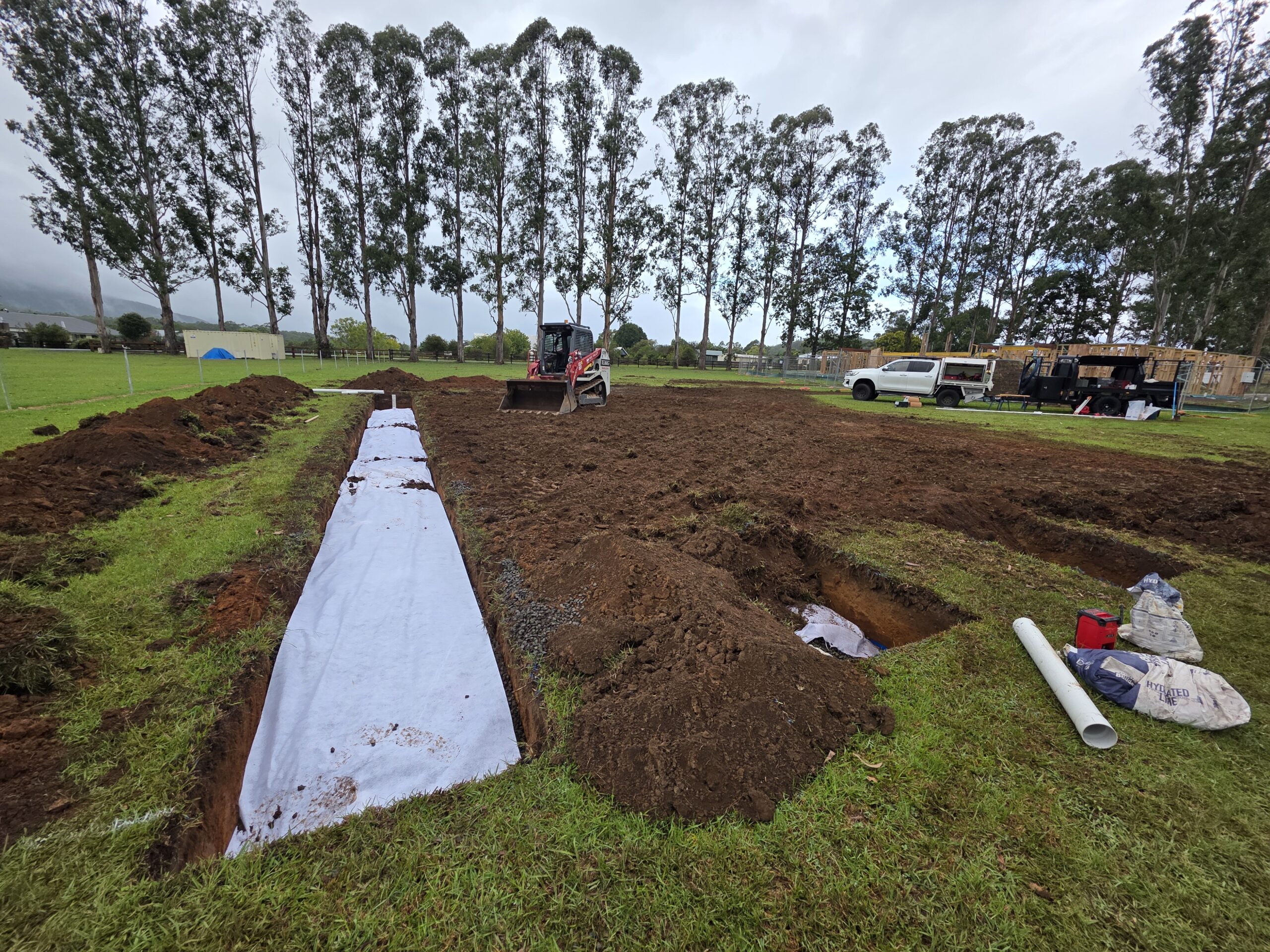
If your home isn’t connected to mains sewer, the system you choose has a big impact on cost, maintenance and how well your property copes in wet weather. For some blocks, a conventional septic tank and trench works well. For others, a more active form of treatment is the better fit.
That’s where aerated wastewater treatment systems come in. Here’s what they are, when they make sense and what owning one involves.
How a conventional septic system works
A traditional septic system collects wastewater in a tank, where solids settle and liquids move out into a trench or absorption area. The soil then slowly filters and treats the effluent.
This works well when there’s enough space, suitable soil and a safe distance from waterways. But on challenging sites, relying on soil alone isn’t always enough.
How an AWTS works
An AWTS (aerated wastewater treatment system) treats wastewater actively, in several stages, rather than just leaving it to filter through the ground. In simple terms:
- Wastewater enters the system, where solids settle out
- Air is pumped through the tank (aeration), which encourages bacteria that break down organic matter
- Further settling and clarification removes more of the remaining solids
- Disinfection, usually with chlorine, treats the water before it leaves the system
The result is a higher standard of treated water than a conventional tank alone produces. That water can usually be used for subsurface or surface irrigation of gardens, subject to local rules and approvals.
When an AWTS makes sense
An aerated system is often chosen when:
- The block is small, with limited room for a large absorption area
- Soil is heavy clay or drains poorly
- The water table is high
- The property is near a creek, dam or other waterway and needs a higher standard of treatment
- Council requires it as part of the approval
- An existing system has failed and needs replacing
That doesn’t mean an AWTS is always the answer. On a large block with good soil, a conventional system may be enough. A site assessment will show which option suits your property.
The trade-offs
Like any system, an AWTS has pros and cons.
Advantages
- Higher treatment standard for difficult or sensitive sites
- Suited to smaller blocks
- Treated water suitable for garden irrigation
- Can meet stricter council requirements
Things to consider
- It uses electricity to run the aerator pump (typically in the range of a household fridge, according to one supplier’s estimate)
- It requires regular professional servicing
- It has more moving parts than a conventional system
- Alarms and components need attention if something goes wrong
Servicing: the part you can’t skip
AWTS systems need regular, licensed servicing. In New South Wales, they’re generally required to be serviced every three months by a qualified technician, in line with health and accreditation guidelines. A typical service includes:
- Checking the aerator pump
- Testing alarms
- Replenishing chlorine
- Assessing sludge and scum levels
- Measuring water quality
- Submitting compliance reports to council
Skipping services can lead to council penalties and poorer performance, and in the worst case, system failure.
Day-to-day care
Between services, a few habits help:
- Spread out large water loads, such as multiple washing loads in one day
- Avoid wet wipes, nappies and sanitary products
- Use septic-safe cleaning products and go easy on bleach
- Don’t switch off the power to the system
- Respond promptly if an alarm sounds
- Keep irrigation areas clear of heavy traffic and don’t use treated water for drinking
Approvals and paperwork
Installing or replacing a wastewater system usually needs council approval, and ongoing compliance reporting. This can be complex, so look for an installer who can manage the permit submission, liaise with local health authorities and handle annual paperwork on your behalf.
Choosing an installer and servicer
When you’re comparing providers, ask:
- Do you design, install and service systems, or only some of those?
- Is the work done in-house by licensed plumbers and electricians?
- Which brands do you install and service?
- Will you assess my site and tell me honestly if a conventional system would do?
- Do you offer free quotes and emergency support?
- Will you handle council approvals and compliance reports?
A Mid North Coast option
Mid Valley Septics is a family-run wastewater business that designs, installs, services, repairs and replaces AWTS systems. They also handle septic tank and trench systems, sand filters, off-grid systems and septic tank removal. Their licensed plumbers and electricians do the work in-house, and they manage permit submissions and compliance paperwork. They service areas including Coffs Harbour, Nambucca Heads, Valla Beach, Bowraville, Taylors Arm, Woolgoolga, Kempsey, Port Macquarie and Taree, and offer free quotes and 24/7 emergency support.
A quick checklist
- Get a site assessment to confirm what your property needs
- Compare conventional and aerated options
- Check council requirements and approvals early
- Budget for regular servicing, not just installation
- Keep service records and compliance reports
- Know what to do if the alarm sounds
Final thoughts
An aerated system can be the right answer on small blocks, difficult soils and sensitive sites, but it’s not set-and-forget. Get the design right, commit to regular servicing and use a local provider who knows your council area, and it can run reliably for years.